Showing posts with label crime. Show all posts
Showing posts with label crime. Show all posts
Wednesday, October 12, 2016
Daily Headlines: October 12, 2016
* Haiti: An official report said Hurricane Matthew decimated Haiti’s agricultural sector including the loss of tens of thousands of acres of farmland and more than 350,000 heads of livestock.
* Venezuela: Venezuelan intel chief Gustavo González López accused the opposition of planning a terrorist escalation aimed at deposing President Nicolas Maduro, while critics point out that state-owned PDVSA is falling closer to default in the oil-rich country.
* Honduras: Authorities in the United States and Honduras are collaborating in the investigation of thirty-five members of the Honduran political elite with potential ties to criminal groups.
* South America: In the latest round of World Cup qualifiers, Brazil heads the standings with four straight wins and Argentina was stunned at home against Paraguay.
YouTube Source – CCTV News (“Hurricane Matthew has left Haiti in a catastrophic state…Making things worse is that the country is still struggling after it was devastated by a magnitude-7 earthquake in 2010.”)
Online Sources – Xinhua, InSight Crime, UPI, Finanical Times, Goal.com

Thursday, November 12, 2015
Daily Headlines: November 12, 2015
* Chile: Groundbreaking commenced yesterday in the construction of the supersized Giant Magellan Telescope in Chile’s northern Andean region.
* Venezuela: President Nicolas Maduro blamed “imperialist ambushes” for the arrest of two nephews of first lady Cilia Flores for allegedly attempting to smuggle drugs into the U.S.
* Puerto Rico: The homicide rate in Puerto Rico has fallen by 15% compared to last year and 40% in relation to 2012 according to Gov. Alejandro Garcia Padilla.
* Mexico: A new exhibition at a Mexico City museum attempts to link the 1968 Tlatelolco massacre with the disappearance of 43 Ayotzinapa students missing for nearly fourteen months.
YouTube Source – Marca Chile
Online Sources – Reuters, Latin American Herlad Tribune, Endgadget, The Guardian
Wednesday, November 11, 2015
Daily Headlines: November 11, 2015
* South America: Polls this week have given Argentine opposition candidate Mauricio Macri a minimum six-point lead ahead of the November 22nd runoff, while Organization of American States chief Luis Almagro blasted Venezuelan officials for failing to guarantee the December 6th legislative elections.
* El Salvador: A media probe found that authorities have not looked into the murders of fourteen people by death squads despite El Salvador’s high homicide rates.
* Honduras: Indigenous people living on the Caribbean coast of Honduras claimed that their land is being illegally seized by squatters and narcotraffickers.
* Latin America: Leaders at the Summit of South American-Arab Countries called for a political settlement in Syria and condemned Iranian interference in the Middle East.
YouTube Source – Financial Times
Online Sources – Reuters, Gulf News, NBC News, InSight Crime, teleSUR English
Friday, July 3, 2015
Daily Headlines: July 3, 2015
* Colombia: The U.N. Office on Drugs and Crime found that coca cultivation in Colombia increased by 44% in 2014.
* Brazil: The Brazilian Congress rejected a bill that would have allowed criminals as young as 16 to be tried as adults and potentially sent to overcrowded adult prisons.
* Venezuela: The Spanish government will seek from Venezuela the extradition of a convicted member of Basque separatist group ETA.
* Mexico: Human rights investigators accused the Mexican army of the extrajudicial killings of drug gang suspects including twenty-two people in Tlatlaya last year.
YouTube Source – AFP
Online Sources – BBC News, teleSUR English, ABC News, ABC Online
Tuesday, June 16, 2015
Daily Headlines: June 16, 2015
* Colombia: "What you can do, count on us," exclaimed Pope Francis who offered to help with peace talks between the Colombian government and FARC that have continued amid a recent rebel offensive.
* Mexico: Education authorities dropped “costly and cumbersome” requirements for hundreds of thousands of foreign-born children attending Mexican schools.
* Brazil: As part of the debate over youth crime in Brazil, legislators are expected to vote this month on a controversial proposal to lower the age a suspect can be tried as an adult from 18 to 16.
* Venezuela: Venezuelan President Nicolás Maduro indicated that meetings this weekend between officials from his country and the U.S. could help improve bilateral diplomatic relations.
YouTube Source – euronews (Colombia’s FARC guerrillas have gone on a violent offensive since ending their unilateral ceasefire nearly one month ago).
Online Sources – ABC News, Fox News Latino, UPI, The Guardian
Wednesday, August 13, 2014
Daily Headlines: August 13, 2014
* Ecuador: At least two people are dead and several more are trapped by a landslide caused by a 5.1-magnitude earthquake near Quito, Ecuador yesterday.
* Chile: A group of armed gunmen stole over $10 million from an armored vehicle in what has been reported as the largest robbery in the Chile's history.
* Brazil: Officials at the Sao Paulo state Education Department have come under fire after posting a job opening that requires female applicants to undergo genealogical exams.
* Colombia: According to the U.N. High Commission for Human Rights more than 400,000 Colombian refugees affected by armed conflict have fled to other countries.
Video Source – NTDTV via YouTube
Online Sources – The Guardian; BBC News; The Huffington Post; Colombia Reports
Thursday, July 3, 2014
Daily Headlines: July 3, 2014
* Mexico: Approximately $9.5 billion in remittances were sent to Mexico from January to May of this year and representing nearly 8% more than the same period in 2013.
* Brazil: Authorities arrested eleven people accused of illegally selling tickets to the World Cup while a “massive cybercrime ring” may have stolen billions of dollars in Brazil.
* U.S.: The unemployment rate among Latinos rose slightly in June to 7.8%, which is 2.3% less than the rate in June 2013 yet 1.7% higher than the overall unemployment rate for last month.
* Central America: Senior Nicaraguan ruling party legislator Edwin Castro claimed that the planned interoceanic canal in that country will not “compete” with an expanded Panama Canal.
Video Source – YouTube via ExcélsiorTv
Online Sources – NBC News; La Prensa; BBC News; Fox News Latino; LAHT
Wednesday, January 22, 2014
Daily Headlines: January 22, 2014
* Brazil: FIFA officials warned that the Brazilian city of Curitiba could be excluded from hosting World Cup matches in June while International Olympic Committee President Thomas Bach noted that work must be sped up ahead of the 2016 Summer Games in Rio de Janeiro.
* U.S.: A study published this month in the journal “Crime & Delinquency” concluded that about 44% of Latino men and 16% of Latinas are arrested at least once on non-traffic-related crimes by the time they turn 23-years-old.
* Panama: Representatives of the Panama Canal Authority and the consortium contracted to expand the famed waterway negotiated possible ways to make sure work continues on the troubled project.
* Ecuador: Ecuador is reportedly topping Brazil as Latin America’s top cocoa producer and in 2015 could become the number-four producer of cocoa in the world.
Video Source – sntv via YouTube (“World Cup workers in the southern city of Curitiba went on strike (in December) because of late pay at one of the stadiums that will host matches during the 2014 tournament”.)
Online Sources- Bloomberg; CNN; Fox News Latino; Reuters; Washington Post
Friday, January 17, 2014
Daily Headlines: January 17, 2014
Note: The following video contains some graphic images and is Not Safe for Work.
* Latin America: A new study from Mexican think-tank Seguridad, Justicia y Paz concluded that forty of the world’s top fifty most murderous cities are located in Latin America and that “homicides in (the region) are well above the world average.”
* Colombia: Colombian authorities blamed the FARC for a bombing yesterday that left at least one person dead though a spokesman for the rebels denied that the guerillas were behind the attack.
* Chile: Chilean government officials denied accusations of environmental and archeological damage caused by the Dakar Rally that has been held in South America since 2009.
* U.S.: The American Civil Liberties Union has called for a federal investigation into allegedly abusive practices by the U.S. Border Patrol at checkpoints in Arizona near the U.S.-Mexico border.
Video Source – Channel 4 via YouTube (For the third straight year Mexican think-tank Seguridad, Justicia y Paz found that the Honduran city of San Pedro Sula is the murder capital of the world.)
Online Sources- Fox News Latino; The Guardian; NBC News; Miami Herald
Wednesday, November 13, 2013
LatAm World’s Most Insecure Region Says U.N.
According to a new U.N. report Latin America is the most insecure region in the world and this is greatly hurting the area’s economic development.
“In the past decade, Latin America has been the setting of two areas of growth: economic and criminal,” concluded the 2013-2014 Regional Human Development Report from the U.N. Development Programme (UNDP) that was released yesterday.
The report found that crime levels have increased in Latin America over the past decade while at least eleven countries in the region including Mexico, Brazil and Venezuela have high homicide rates of at least ten per 100,000 residents. Moreover, the number or robberies has tripled over the past quarter century, one in every three Latin Americans reported being a victim of a violent crime in 2012 and half of Latin Americans believe that security in their respective counters has worsened.
The high insecurity in Latin America cost the region 0.5% of its Gross Domestic Product in 2009 (or roughly $24 billion) according to the report. Latin American youth that are needed to help drive the region’s economy are the most affected by crime and violence and are most vulnerable in countries like El Salvador and Colombia. Additionally, for Latin American countries like Honduras and Paraguay public spending on crime-related factors such as the judiciary, prison system and law enforcement are at high levels.
"There is no magic solution to insecurity, but this serious problem can be remediated—with vision and long-term political will," said UNDP Director for Latin America and the Caribbean Heraldo Muñoz. "Each country needs to secure a National Citizen Security Agreement between the government, political parties and civil society so it truly becomes a state policy."
Among the recommendations made by the UNDP to combat insecurity in Latin America is the need to undergo major reform in prison systems that are plagued by overpopulation as well as creating public policies to protect those most affected by crime. Furthermore, the UNDP suggests that Latin American countries need to do a better job at combating gender-based violence such as femicides and also reduce “crime triggers” like alcohol and drugs.
For the report’s main author, the approach by several Latin American states to lower crime is having the opposite effect:
“While some threats – such as organized crime, especially drug trafficking – are often used to explain insecurity, the regional, national and local dynamics are much more diverse,” explains the lead author, Rafael Fernandez de Castro.
One of the main lessons he drew in the report is that “iron fist” policies do not work: strong police and criminal repression in the region have often coincided with high crime rates.
The assessed experiences confirm that protecting the rights to life, to dignity and to physical integrity is essential to citizen security, which, as a public good, is a responsibility of the state, the report highlights.Video Source– YouTube via AFP
Online Sources - U.N. Development Programme; U.N. News Centre
Monday, June 18, 2012
Daily Headlines: June 18, 2012
* Mexico: Global economic inequality and debt problems in several European countries will likely be two of the topics to be discussed at the G20 summit in Los Cabos today and Tuesday.
* Brazil: Brazil is pushing a “balanced” plan for sustainable development before global leaders arrive for the Rio+20 conference this week.
* Puerto Rico: Nationalist activist Norberto González Claudio pleaded guilty as part of a plea deal for his role in an armed car robbery in 1983.
* Guatemala: A judge tossed out a lawsuit against several U.S. officials by Guatemalan victims secretly infected with sexually transmitted diseases in the 1940s.
Video Source – YouTube via sabcdigitalnews
Online Sources- Voice of America, ninemsn.com, CBS News, Miami Herald
Sunday, April 15, 2012
Americas Summit Consensus Reached on Drugs, Organized Crime
The sixth edition of the Summit of the Americas in Cartagena, Colombia ended on Sunday with the absence of a final declaration. Despite the disagreement among countries over issues like Cuba, the Falklands and drug legalization, consensus was reached in other areas.
Colombian president Juan Manuel Santos announced that countries at the summit agreed to give the Organization of American States (OAS) a mandate to examine illegal drug policies.
“Many assumptions are made over how to carry out the fight against drugs. Nobody knows exactly how to do it and this must be analyzed,” said Santos at the end of the summit.
Tuesday, February 1, 2011
Argentina: Rise in female incineration deaths
 Perhaps the most well known case of violence against women in Latin America are the hundreds of femicides in the Mexico's Ciudad Juarez. In one South American country, meanwhile, an increase in femicides has caught the attention of police and women’s’ rights groups.
At least 260 women and young girls in Argentina were killed in 2010 including eleven via incineration according to local NGO La Casa del Encuentro. The number of female burn victims last year represented a slight increase compared to 2009 and includes the death of Wanda Taddei, the wife of former Los Callejeros member Eduardo Vázquez. (Quick aside: Los Callejeros were the rock band playing during 2004’s tragic Republica Cromagnon fire that claimed the lives of nearly 200 partygoers).
Sadly the increase in violence against women in Argentina continued into this year; last week alone three women were killed via incineration. Hence, La Casa representative Fabiana Tuñez proposed several reforms including preventing impunity against those accused of committing such crimes. Furthermore, as she told the local press:
"We ask that femicides are recognized as an independent criminal offense using antecedents that already exists in Guatemala, Costa Rica and most recently in Chile”…The issue of violence against women has received renewed attention with the recant deaths of several Ciudad Juarez women’s rights activists. Additionally, an article published yesterday in Mexican daily El Universal accused the federal government of making “inoperable” a landmark 2007 law aimed at protecting women.
The intent behind having femicides as a spate crime “is not because we believe that it is the only way to combat violence against women, but because it’s a judicial recognition to clearly show that this form of violence is unacceptable.”
Image- El Universal
Online Sources- Terra Peru, The Latin Americanist, Clarin.com, ElComercial.com.ar
Friday, August 13, 2010
More Crazy Expats in Latin America
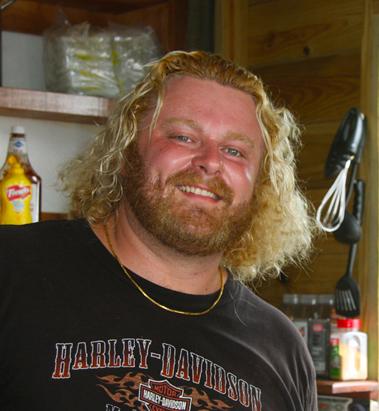 This time in Panama. A few weeks back I got a text that a suspected "serial killer" was on the loose, suspected in the deaths of multiple people in the idyllic Bocas del Toro province near the Costa Rican border.
About a week later, the suspect, "Wild Bill Cortez" (real name: William Holbert) was arrested with his wife and suspected accomplice while crossing a river between Costa Rica and Nicaragua.
In one of those truly too shocking to be made up stories, Wild Bill (as he is universally known in Panama) is now charged with murdering five American expats to steal their properties. Panamanian President Ricardo Martinelli called the saga "one of the first cases of serial murders in Central America."
The remains of all five were found in a shallow grave on the property he took after after killing one of the suspected victims - a hotel on a remote Bocas Island that he dubbed "Hacienda Cortez."
To gain possession of Hacienda Cortez, Bill is suspected of having killed Michael Brown along with Brown's wife and teenage son. It turns out Brown was in the witness protection program, having cooperated with authorities to turn in drug dealers in the US years before.
Questions remains as to whether more victims will emerge.
To get a full idea of Bill's craziness, check out this ABC News/Nightline video with footage from Bill's time as an outspoke white supremacist in his native North Carolina.
Image Source: ABC News ("Wild Bill" Cortez (Holbert) in Panama)
Online Sources: ABC News, CBS News, Nightline
Friday, February 19, 2010
Daily Headlines: February 19, 2010
 * Latin America: A study conducted in several countries including Guatemala and Argentina found that newborn-care training leads to a notable drop in the stillborn rate.
* Puerto Rico: In the latest frivolous plan to combat crime in Puerto Rico all cell phones may soon have to be registered.
* Ecuador: After asserting that Ecuador has overcome its “energy turmoil”, the country’s energy minister said that Ecuador could export electricity to Colombia and Venezuela.
* Peru: According to Peru’s state media the country could reach a free trade agreement with the European Union as soon as next week.
Image – SheKnows
Online Sources- UPI, AFP, LAHT, Wall Street Journal
Thursday, February 4, 2010
Daily Headlines: February 4, 2010
 * Latin America: Are proposals such as calling in the National Guard to Puerto Rico and regulating social networks in Mexico effective tools to combat crime or cheap political ploys?
* U.S.: Latino groups in Costa Mesa, California and city officials are butting heads over an ordinance banning day workers from soliciting work on the street.
* Brazil: Author Paulo Coelho has a message for ex-British P.M. Tony Blair – stay away from the 2016 Rio Olympics.
* Paraguay: The third and final paternity lawsuit against priest-turned-president Fernando Lugo was dropped due to “personal reasons.”
Image – Seattle Post-Intelligencer
Online Sources- Mashable, Washington Post, Los Angeles Times, BusinessWeek, BBC News
Monday, December 7, 2009
Crime Blotter: LatAm Style

Online Sources: Inquirer.net, Houston Chronicle, AP, Yahoo! News
Image Source: AFP via BBC
Wednesday, September 9, 2009
Aeromexico flight briefly hijacked (updated)
Update (6.15pm):
Update (4.45pm):
According to Milenio's website police captured at least six suspected hijackers of Aeromexico flight 576. The nationalities of the accused have yet to be revealed despite earlier reports claiming that they are not Mexican.Mexican Public Security head Genaro García Luna told the press that there was a lone presumed hijacker of Aeromexico flight 576. The suspect is a Bolivian pastor named José Flores Pereira who allegedly confessed to authorities that he hijacked the plane due to a "divine revelation." García Luna added that Flores Pereira is a drug addict and alcoholic and also described how police were able to commandeer the plane in Mexico City.
Update (5.15pm):Mexico's Office of the Attorney General have charged the now nine suspected hijackers with "terrorism, unlawful kidnapping" and other charges.
Meanwhile, Bolivia's ambassador to Mexico denied that the abductors may've come from that country as some early reports claimed. The suspects are "did not appear Bolivian" and were taller than the average Bolivian said Jorge Mansilla Torres who added that there are no direct flights from Bolivia to Mexico.
Update (4.45pm):
One of the passengers briefly spoke on TV and claimed that one of the hijackers was "well-dressed, robust, dark-skinned (and) a good passenger."
Transportation Secretary Juan Molinar Horcasitas told the press that there was no bomb on board the plane. All the occupants were freed said Horcasitas and none of them are injured.
The following footage from MSNBC shows the passengers getting off the plane under police observation:
Original Post:
 In a developing new story, an Aeromexico flight bound for Cancun was hijacked and diverted to Mexico City.
According to footage shown by Televisa police troops surrounded Flight 576 shortly after landing and freed all the plane's occupants. CNN en Espanol reported cited TV Azteca who claimed that five people have been detained by police.
According to previous reports, three men took over the plane in midair and and threatened to explode it unless they could speak to Mexican president Felipe Calderon. (Calderon had been at the presidential hangar in that airport yet canceled his flight and left the facility as the hijacking transpired). The identity of the hijackers is unknown though one Mexican source claimed that the abductors could be of Colombian or Bolivian background.
The entire incident began roughly two hours ago but it appears to be under control.
Details continue to be very sketchy at the time of this post. We will update it as soon as more information becomes known.
Online Sources - CNN, Los Angeles Times, New York Times, Reuters
Image- CNN
Tuesday, September 8, 2009
Mexican cabinet shakeup includes Attorney General
 Mexican president Felipe Calderon announced several important changes to his cabinet this week including the money-saving elimination of three ministerial posts. The most vital change, however, was the resignation of the country’s Attorney General.
President Felipe Calderon praised outgoing A.G. Eduardo Medina Mora for his "professionalism, his commitment and loyalty to Mexico." Yet neither Calderon nor Medina Mora gave reasons why the latter quit from being Mexico’s top cop though the president claimed that Medina Mora has been asked to serve as a “part of Mexico's diplomatic corps”.
Medina Mora was the brains behind Mexico’s toughen anticrime strategy that has suffered more downs than ups. Despite the dispatching of over 45,000 troops nationwide under the plan, violence continues to rise especially in the northern border states. (This might explain Calderon’s pick of ex-Chihuahua attorney general Arturo Chavez to replace Medina Mora). Furthermore, the change may mean a new shift in law enforcement tactics:
More than 13,000 people have died since Mr. Calderon took office, according to newspaper estimates, most victims of internecine warfare between drug cartels fighting over drug routes to the U.S. and increasingly lucrative Mexican drug markets.Image- AFP
Mr. Medina Mora's departure is a boost for Public Security Minister Genaro García Luna: The two men had clashed over Mr. García Luna's plans to create a single national police force under his command. Mexico's Congress killed that plan, but Mr. García Luna has begun creating a de facto national police, his new Federal Police force.
Online Sources- Christian Science Monitor, Al Jazeera English, Wall Street Journal, AP
Wednesday, August 26, 2009
Venezuelan considers violent videogame ban
 According to Mexico’s Citizens Council for Public Safety, Ciudad Juarez is the most dangerous city in the Americas followed by Caracas, New Orleans, and Tijuana.
Regarding Venezuela, some steps have been taken to combat the increasingly rampant crime that has hit large cities like the capital. Actions like reforming the Venezuelan police are necessary and should hopefully alleviate urban violence. Yet there are other moves which are purely cosmetic and unrealistic. The bill to ban the sale of violent videogames is one of them:
Venezuelan lawmakers are moving to outlaw the sale of violent videogames and toys in an attempt to fight rampant crime in the country.Image- The Age (“Still from Grand Theft Auto: Liberty City Stories.”)
A bill to ban sales of violent games passed its first hurdle in the National Assembly on Tuesday evening, the legislative chamber said in a statement issued on Wednesday…
Opponents of President Hugo Chavez say 100,000 people have been murdered since he assumed office in February 1999. The government says its opponents and Venezuela's private media exaggerate the problem…
Some countries ban violent videogames and many restrict their sale to children. Although few studies have shown that such games cause aggressive tendencies, they have often been the subject of controversy.
Online Sources- El Tiempo, Reuters, LAHT
Subscribe to:
Posts (Atom)
