 Mexican President Vicente Fox's decision to curb energy costs for Mexicans by implementing price ceilings on gas are expected to cost the government US$860 million this year, according to the head of Mexico's state oil company. (BusinessWeek)
Tuesday, September 13, 2005
Mexico's price controls on gas prove costly
Mexican President Vicente Fox's decision to curb energy costs for Mexicans by implementing price ceilings on gas are expected to cost the government US$860 million this year, according to the head of Mexico's state oil company. (BusinessWeek)

Fox ally likely to lose party elections
 Mexican President Vicente Fox's favored candidate to lead his National Action Party (PAN), Santiago Creel, has lost the first round of party elections to Felipe Calderon. Analysts attribute the loss to his close ties to the Fox administration, whose popularity has dwindled of late. (Financial Times)
Colombian hijackers surrender
 Two men believed to be father and son hijacked a Colombian airliner Monday, and appear to have surrendered the same afternoon. The incident does not seem to involve Marxist guerrillas, responsible for several previous hijackings, but a grievance over unpaid benefits to the father, who is confined to a wheelchair. (BBC)
Monday, September 12, 2005
U.S. denies Cuba visa to attend U.N. conference
 The United States refused to grant Ricardo Alarcon, of Cuba's Permanent Mission to the United Nations, a visa to attend the 2005 World Conference of Speakers of Parliament last week. Alarcon said he expected to received a visa, and has also applied for one to attend a World Summit next week that will also take place at the United Nations headquarters in New York. (Reuters)
Costa Rica receives first S. Korean head of state

 South Korean President Roh Moo-Hyun became the first ever head of his country to visit Costa Rica in office. South Korea was the number one Asian investor in Costa Rica, and the two countries seek to increase economic cooperation further. (The Korea Times)
Colombian airline hijacked
 CNN reports that a Colombian airline carrying 25 people, including a Congressman, was hijacked this morning, apparently by civilians not connected to an organized militia group. The Chief of the Colombian Air Force is currently in negotiation with the hostage takers. (CNN)
The Economist: Mexican President exhibits 'childishness'
 In an article in this week's publication, The Economist states that Mexican President Vicente Fox's tit-for-tat exchanges with opposition parties in Congress amount to 'childish behavior'. Fox's PAN party has failed to form a consensus on just about anything in Mexico's legislative body, preventing reforms that were promised during Fox's election campaign. (The Economist)
Border dwellers turning to Mexican gas
 As gas prices have skyrocketed in the States, Mexican and U.S. gas consumers on the border are increasingly turning to Mexican gas as the solution. Mexicans have grown accustomed to purchasing gas across the border, which has been cheaper than gas supplied by Mexican state oil company Pemex until now. (The Arizona Republic)
Colombian rebels disband
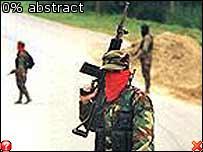 Nearly 40 Colombian Marxist guerrillas disbanded Friday due to a new law passed by President Alvaro Uribe that offers reduced jail terms for those who lay down their arms. They are the first leftist rebels to disband under the new law, following over 10,000 right-wing paramilitaries who have done so since June. (Reuters)
Ambassador: U.S. requested help from Venezuela
 Venezuelan Ambassador to the United States Bernardo Alvarez revealed that Bush administration officials requested help from the Venezuelan government despite unsteady relations between the two countries. He maintained that U.S. officials requested additional supply to ease the oil market and donations to the American Red Cross. (Columbia Daily Tribune)
Sunday, September 11, 2005
Mexico's inflation rate at record low
 Mexico's annual inflation rate fell to 3.95% in August, making it the lowest rate since the central bank began keeping records in 1969. The bank is expected to cut interest rates by a quarter of a percentage point at it's September 23rd meeting. (The Arizona Republic)
EU plans to end sanctions on Haiti
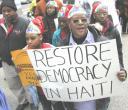 A spokesman for the European Union has announced that sanctions on Haiti are due to be lifted as early as October, in light of Haiti's upcoming elections and democratic reforms. Sanctions have been in place since 2001, when the EU decided that Jean-Bertrand Aristide's government had failed to live up to the democratic principals of the 'Contonou Agreement' between the two entities. (The Jamaica Observer)
Brazil's Congress to decide fate of Lower House leader
 Brazil's Congress is in the process of deciding whether Lower House President Severino Cavalcanti should be ejected for allegedly accepting bribes from a catering company in 2002-3. Though not a member of Lula's Partido Trabalhador, he is a supporter of the government and his ouster will be a blow to the administration. (Financial Times)
Kirchner seeks to curb smoking in Argentina
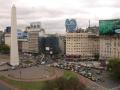 Argentine President Nestor Kirchner has proposed several moves to curb smoking in the country, including a minimum price of $1/pack, banning smoking in many areas, and restricting advertising. His proposals have been met with opposition in Congress, partly due to the fact that Argentina is the world's fifth largest tobacco producer. (Houston Chronicle)
U.S. opposes ouster of Nicaraguan President
 New U.S. Ambassador to Nicaragua Paul Trivelli said Friday that democratically-elected President Enrique Bolanos' ouster "would be a tragedy for Nicaragua". Bolanos has incurred the wrath of Congress after implementing strict anti-corruption measures, and prosecuting his own Liberal Party's unofficial leader, former President Arnoldo Aleman. (SFGate)
OPEC fund to finance Cuban electricity modernization
 The OPEC Fund for International Development signed a $10 million aid agreement to modernize Havana's aging electricity network. The move is expected to increase living standards in the capital and increase the prospects for tourism in the country. (Harold Doan & Ass.)
Subscribe to:
Posts (Atom)
