Tuesday, March 6, 2012

Daily Headlines: March 6, 2012

São Paulo - Skyline by night
* Brazil: Official figures released today showed that the Brazilian economic boom continued last year though the 2.7% growth rate was slightly less than originally predicted.

* Peru: Approximately 5000 people in Amazon province of Madre de Dios protested against government plans to crack down on illegal mining operations.

* Dominican Republic: Famous television producer, presenter and philanthropist Rafael Corporán died on Monday at the age of 71.

* U.S.: According to a new poll a majority of Latino voters would support President Barack Obama in a head-to-head matchup with any of the Republican presidential hopefuls.

Image Source – Flickr via Andre Deak (The nighttime skyline of Sao Paulo, Brazil.) (CC BY 2.0).

Online Sources- BBC News, AFP, Dominican Today, Fox News Latino

Monday, March 5, 2012

Report: Latin America and Caribbean Tops Femicide List

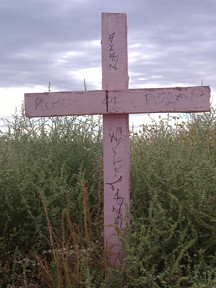
Pink Crosses
Latin America and the Caribbean is the world’s most dangerous region for femicides according to data gathered by the Small Arms Survey (SAS).

The SAS report found that a whopping fourteen of the twenty-five countries with the highest femicide rates come from Latin America and the Caribbean. El Salvador, with twelve femicides per 100,000 people, is the worst of the worst and is followed by Jamaica (10.9 per 100,000) and Guatemala (9.7 per 100,000). Honduras, Colombia and Bolivia where also among the top ten on the SAS list with at least seven femicides per 100,000 individuals.

The SAS report concluded that the countries with the highest rates of femicides, or homicides where the victims is girl or woman, also generally have high rates of “lethal violence”. Therefore, in countries with very high femicide rates women are reportedly more likely to be “attacked in the public sphere, including by gangs and other criminal groups.” As a result, “femicides often take place in a general climate of indifference and impunity.”

The study also found that the femicide rates could vary within countries such as Mexico where the national rate was 2.5 per 100,000 in a four-year span while the rate was an astronomical 19.1 per 100,000 in Ciudad Juarez in 2009. In addition, countries like Brazil and Venezuela interestingly have high femicide rates though “men are up to ten times more likely to become victims of homicide.”

Femicides and violence against women made headlines in several nations in the Americas over the past few days:
  • Argentina
The trial of Eduardo Vásquez, a former musician accused of killing his wife by setting her on fire, continued with prosecution witnesses claiming that the defendant was a “horrible person and a monster.”
  • Chile
According to a local study the number of femicides in the first two months of this year grew by 60% compared to the same period in 2011.
  • Guatemala
Citing the need to ensure equal rights for women, the country’s Constitutional Court upheld a legal challenge against an anti-femicide law that was approved last year.
  • Mexico
Officials in the state of Mexico have come under fire after a bus driver accused of murdering at least eight women escaped from custody and was on the lam for six days before being recaptured.
  • Puerto Rico
The commonwealth’s special prosecutor for women gave her approval to a measure that would legally recognize the crime of femicide.

Image Source – Flickr via Miami Workers Center (Pink crosses that serve as memorials to women murdered in Ciudad Juarez, Mexico). (CC BY 2.0)

Online Sources - Small Arms Survey, La Nacion (Argentina and Chile), LAHT, Prensa Libre, El Nuevo Dia

Bolivian President Bows to Pressure from Disabled Activists

A group of disabled demonstrators agreed to end weeks of protests after Bolivian president Evo Morales agreed to some of their main demands.

The breakthrough came after Morales said on Friday that he would support a proposal granting increased rights to disabled individuals. The General Law for Persons with Disabilities would grant equal rights to the disabled as well as the “social inclusion of disabled people in public institutions of the state.” Furthermore, the proposal would reportedly drop the tariffs on imports of wheelchairs and other assistive devices as well as free medical access in public hospitals.

Additionally, Morales also agreed to the protesters’ request for an annual state subsidy for the disabled. However the $143 per person agreed to was less than the original $431 per individual sought by the protesters.

Disabled protest leaders subsequently said that the group of approximately fifty people would leave from the tent camp that they resided in for nine days in La Paz’ Murillo Square. “We will return to our points of origin with three key victories: the approval of the law (for the disabled), the granting of a subsidy for disabled people and bringing citizen awareness to our cause,” claimed protest leader Carlos Mariaca.

The protesters’ actions began last November when dozens of people with disabilities and their supporters marched along the highways from the province of Beni to the capital city. Their 1000-mile gained little global attention until last month when some of the protesters clashed with La Paz riot police:

The government backed the actions of the officers and minister Carlos Romero alleged that opposition activists infiltrated the group of disabled demonstrators. Yet the police were accused of unnecessarily repressing the protesters including the reported use of pepper spray and “tazing” to control the crowd.

“Any allegations of abuse should be thoroughly and impartially investigated,” said Guadalupe Marengo, Deputy Americas Program Director at Amnesty International.

Video Source – YouTube via Al Jazeera English

Online Sources – Diario El Siglo, Amnesty International USA, The Guardian, AFP, The Latin Americanist

Daily Headlines: March 5, 2012

Taxiiiiiiiiiii
* Mexico: Mexico City’s government decided that the cab licenses of the metropolis’ unique Volkswagen Beetle taxis, known locally by the nickname of “vochos”, would expire at the end of this year.

* Venezuela: Both the government and opposition have accused each other of being responsible of being behind an attack during a rally for presidential challenger Henrique Capriles.

* Peru: Authorities captured the suspected head of the Shining Path guerillas that succeeded the recently captured Comrade Artemio.

* Haiti: According to a new study there has been a dramatic spike in major crimes in Haiti’s major cities but “there is no single factor to explain the rise in violent crime.”

Image Source – Flickr via Fredo in (((Stereo))) (CC BY 2.0)

Online Sources- The Telegraph, LAHT, BBC News, ABC News

Friday, March 2, 2012

World Watch: Pump

Pumping gas
* U.S.: The price of gasoline in the U.S. rose for the 24th straight day while the price of Brent crude oil fell 2 percent for the week after five consecutive weekly gains.

* Syria: "It is unacceptable that people who have been in need of emergency assistance for weeks have still not received any help," said the president of the Red Cross after the Syrian government refused medics entry into the besieged area of Baba Amr.

* North Korea: In the aftermath of North Korea’s recent denuclearization plans, meetings are expected to take place next week to finalize details of a new U.S. food aid program to the Asian country.

* Russia: Prime Minister Vladimir Putin is expected to easily win Saturday’s presidential election in the first round by a comfortable margin according to several polls released this week.

Image Source– Flickr via futureatlas.com (CC BY 2.0)

Online Sources – Associated Press, Reuters, USA TODAY, CNN, Voice of America

Daily Headlines: March 2, 2012


* Guatemala: A court ruled that former dictator Efraín Ríos Montt is not exempt from prosecution on charges of genocide related to his time in power thirty years ago.

* Haiti: Days after rallying on the anniversary of the 2004 coup against ex-president Jean Bertrand Aristide, one of his key supporters said that more anti-government protests will be held next week.

* Argentina: President Cristina Fernandez de Kirchner rejected calling for the nationalization of Argentina’s biggest energy firm, which is owned by Spain’s Repsol.

* Brazil: Air accidents in Brazil increased by over forty percent last year according to new figures published by the air force.

Video Source – YouTube via euronews (Video from last January showed ex-Guatemalan dictator Efraín Ríos Montt in court facing genocide charges).

Online Sources- CNBC.com, Bloomberg, MSNBC, CNN, The Latin Americanist

Thursday, March 1, 2012

Daily Headlines: March 1, 2012


* Latin America: Lio Messi scored his first international hat trick in Argentina's win over Switzerland, while Jose Pekerman enjoyed a great debut as Colombia coach with a 2-0 victory over Mexico.

* Cuba: U.S. Secretary of State Hillary Clinton said that imprisonment of contractor Alan Gross in Cuba is “deplorable” and said that she will not make any concessions in order to free him.

* Puerto Rico: Hundreds of protestors demonstrated in San Juan earlier this month and expressed their opposition to a commonwealth government-backed natural gas pipeline project.

* Venezuela:Here I go, soaring like the condor,” said President Hugo Chavez via Twitter regarding his recovery from surgery in Havana.

Video Source – YouTube via TVPublicaArgentina

Online Sources- Global Voices Online, swissinfo, SI.com, Fox News Latino, Huffington Post

Wednesday, February 29, 2012

Today’s Video: Coup in Haiti

February 29th is a date that appears every four years in order to compensate for the discrepancy between the 365 days of the yearly calendar and the slightly longer time it takes the Earth to make one trip around the sun. For Haitians, this unique date on the calendar has a major significance.

On this date two leap years ago Jean Bertrand Aristide was ousted for the second time from the Haitian presidency. The coup d’état against him came after three weeks of attacks by a rebel army formed by armed gangs and dissident military troops.

The role of several international actors in the coup such as the French and Canadian governments continues to be a source of controversy since Aristede left Haiti in 2004. For instance, the U.S. State Department claimed that his ouster was “facilitated” by Marines based on his request. Days after he left Haiti Aristede alleged that he was forced to leave in order to “avoid bloodshed.”

Aristede’s many detractors including “business leaders (and) landowners” claimed that he was an authoritarian ruler who allowed corruption to run rampant under his administration. Yet for his supporters, such as several hundred protesters who rallied today in Port-Au-Prince, Aristede’s successors have done little to calm political tensions or improve the economy of the Western Hemisphere’s most impoverished country.

The following video is the trailer to a 2005 documentary entitled Aristide and The Endless Revolution. Directed by Nicolas Rossier, the film examined the events leading up to the 2004 coup as well as the consequences of that event in Haiti:

Aristede lived in exile in South Africa for seven years before retuning to Haiti in March 2011.

Earlier this week the Haitian government denied rumors that a judicial investigation was opened against Aristede.

Video Source – YouTube via Baraka Productions

Online Sources- BBC News, CNN, USA TODAY, MSNBC, The Latin Americanist, Haiti Libre

Daily Headlines: February 29, 2012

Anonymous v Co$
* South America: Twenty-five alleged hackers linked to Anonymous were arrested by Interpol in several countries including Argentina, Chile and Colombia.

* Venezuela: Venezuelan Oil Minister Rafael Ramirez said that his country would controversially continue to sell oil to Syria.

* U.S.: An alliance of three Latino civic groups have united with the goal of registering 200,000 new voters ahead of the November elections.

* Panama: Could a Panamanian bobsled team qualify for the 2014 Winter Olympics in Sochi, Russia?

Image Source – Flickr via irrezolut (CC BY-SA 2.0)

Online Sources- Bloomberg, NY1, Jakarta Globe, Christian Science Monitor

Tuesday, February 28, 2012

World Watch: March of the (Fossilized) Penguins


* New Zealand: Scientists discovered the fossilized remains of an extinct penguin species that were over four feet tall and lived between 24-27 million years ago.

* South Sudan: The South Sudan Democratic Movement, one of the county’s largest rebel groups, signed a peace agreement with the government.

* Egypt: Three judges recused themselves from overseeing the trial of over forty “pro-democracy activists” including defendants of Egyptian and U.S. background.

* Syria: According to the U.N. over 7500 people have been killed over the past eleven months as part of the Syrian government’s crackdown against dissidents.

Video Source– YouTube via slatester

Online Sources – Reuters, Voice of America, MSNBC

Today’s Video: Identity

Black History Month will soon be coming to a close. But it's never an inappropriate time to ask what does it mean to be an individual of African-American and Latino background? In the video below via mun2, several celebrities including actor Gina Torres, musician Christina Milian and journalist Soledad O'Brien provide insight into issues of cultural identity, discrimination, and race:

(Hat tip: Pocho).

Online Sources - Pocho

Video Source - YouTube via mun2

Daily Headlines: February 28, 2012 (Updated)

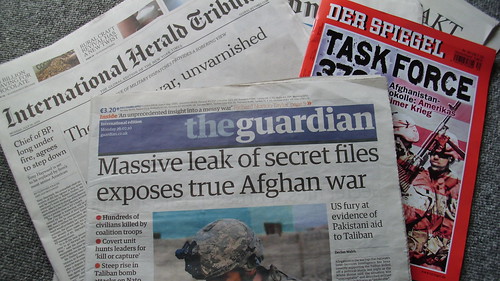
The War Logs
* Venezuela: According to documents published via Wikileaks, Cuban doctors believe that Venezuelan President Hugo Chavez has two years to live while Russian medics gave him one year. (Update: Venezuelan Vice President Elias Jaua said that Chavez was in "good health condition" after undergoing surgery yesterday in Cuba).

* Colombia: Amnesty International urged the FARC rebels not only to end kidnappings but also “other human rights abuses such as unlawful killings, the recruitment of children and the use of indiscriminate weapons such as land mines.”

* Peru: The Shining Path rebel leader known by the moniker of Comrade Artemio was charged with terrorism and drug trafficking in a Peruvian court yesterday.

* Brazil: The Brazilian Institute of Consumer Rights is rallying against a bill that they claim gives FIFA “too much power and few responsibilities” in organizing the 2014 soccer World Cup.

Image Source – Flickr via alexcovic (In 2010 “Wikileaks.org shared the more than 90.000 leaked documents with three publications before they put them online: The Guardian, The New York Times (International Herald Tribune is now the Global Edition of the NYT), Der Spiegel (weekly German magazine).”) (CC BY 2.0).

Online Sources (including Update) - SI.com, BBC News, Amnesty International, The Latin Americanist, Miami Herald, El Universal

Monday, February 27, 2012

World Watch: The Artist


* China: Wang Shu won the prestigious Pritzker Architecture Prize in recognition of his designs including “modernist high-rise apartment buildings to a university library that appears to float on the water.”

* Syria: The E.U. placed new sanctions against the Syrian government and central bank, while dissident activists claimed that 135 people were killed across the country today.

* Russia: Authorities uncovered an alleged assassination plot against Prime Minister Vladimir Putin though opposition politicians claimed that it may be a false diversion to distract from mass protests.

* South Korea: North Korean leader Kim Jong Un blasted joint U.S.-South Korea military drills in the region and claimed that his country would be “ready to fight a war with them.”

Video Source– YouTube via Ecodialogue

Online Sources – CBC News, BusinessWeek, Voice of America, CNN, UPI

Daily Headlines: February 27, 2012

yoani_sanchez
* Cuba: Dissident Oswaldo Paya and blogger Yoani Sanchez were among the 231 nominees selected for this year’s edition of the Nobel Peace Prize.

* Honduras: A Supreme Court spokesperson claimed that under Honduran law an inmate praised for saving lives in a recent deadly prison fire cannot receive a presidential pardon.

* Spain: Baltasar Garzon, best known for indicting ex-Chilean dictator Augusto Pinochet, was cleared of “overstepping his jurisdiction” by investigating possible abuses during the Spanish Civil War.

* Brazil: A "high-impact discovery" that could contain at least 250 million barrels of oil was found about 120 miles off the Brazilian coast.

Image Source – Flickr via ceslava.com (Will Cuban blogger Yoani Sanchez win the Nobel Peace Prize?) (CC BY-SA 2.0)

Online Sources- ABC Online, Honduras Weekly, The Latin Americanist, The Guardian, CBS News

Sunday, February 26, 2012

Nuestro Cine: And the Oscar Goes To...

As we mentioned earlier this month, Demián Bichir of Mexico and Argentine-French actress Bérénice Bejo received Academy Award nominations and they could win the coveted gold statuette this Sunday.

2011 was a banner year for films from Latin America and included action flicks (Mexico's Miss Bala), "gaucho westerns" (Argentina's Aballay) and innovative thrillers (Uruguay's The Silent House). Nonetheless, movies from the region where unfortunately overlooked when the Academy selected its finalists for Best Foreign Film.

Could Chico and Rita capture top honors tonight in the Best Animated Film category? The love story between two Cuban musicians has an outside chance of winning over the likes of bigger box office draws such as Rango and Puss in Boots. But as we pointed out in 2010, Chico and Rita has a wonderful plot, rich animation and a soundtrack scored by celebrated Cuban pianist Bebo Valdés.

Check out the following clip for Chico and Rita and decide for yourself if it deserves Oscar honors tonight:

Update: Bichir, Bejo, and Chico and Rita did not win in their respective categories at Sunday's Academy Awards ceremony.

Online Sources - Wikipedia, IMDB.com, The Latin Americanist

Video Source - YouTube via VesCine1

Colombian FARC guerillas to halt kidnappings, free ten hostages

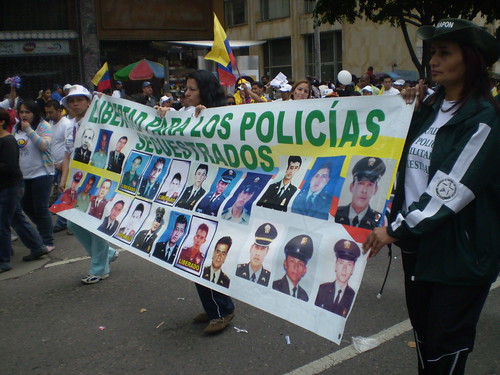
Marcha 20 de julio - Libertad para los policías secuestrados
Colombia’s FARC rebels will allegedly free all ten kidnapped military and police officers according to a communiqué issued on Sunday morning.

The guerillas declared “our decision to add the remaining four to the announced decision to release six prisoners of war” in a message first published via the Anncol news organization’s website. Furthermore, the FARC claimed that "from today on we ban the practice" of kidnapping, which is a tool that they have used for decades as part of their armed conflict against the Colombian state.

The declaration did not mention if the rebels would free any of their civilian hostages and also stopped short of calling for a ceasefire. The FARC’s statement detailed that they will “resort to other forms of funding and political pressure” and alleged that the increased militarization by the government would lead to “an indefinite prolongation of the war.”

Colombian president Juan Manuel Santos reacted cautiously to the announcement by the guerillas. In a pair of Twitter messages, Santos said that he was “very happy” over the freeing of the ten men but warned that renouncing future kidnappings was an “insufficient” move.

Today’s news comes three months after the FARC said that they would free six policemen and troops. That process was delayed, however, after the rebels accused the government of not suspending military operations in the area where the hostage release was due to take place. (In response, the Santos regime blamed the FARC of lying by not providing the geographic coordinates for a potential liberation).

Marleny Orjuela, the head of the Colombians for Peace activist group, was named by the FARC as one of the liaisons for the planned freeing of the hostages. She urged the Colombian government, the International Red Cross and delegates from the Brazilian government to “meet as soon as possible” in order to work out the details of the liberation that could take place as soon as next month.

The possible liberation of the uniformed personnel was met with joy and excitement by some of their family members. “This is news that we’ve been waiting for a long time,” said Griselda Medina whose son, Wilson Rojas, has been held against the will by the FARC since 1999.

Several days ago a radio station held a marathon broadcast from Bogota’s central Bolivar Plaza urging an end to kidnappings by the FARC and other guerilla groups. Relatives of kidnapping victims and others affected by the Colombian armed conflict participated in the event including Natalia Andrea Duarte. She arrived in the main square after marching forty miles in solidarity for her father, a policeman kidnapped by the FARC nearly thirteen years ago. The seventeen-year-old called on ordinary Colombians to combat violence and had some harsh words for her dad’s captors:
“I’m very sad and disappointed by Colombia,” she said and also noted that when she reached the Bogotá suburb of Soacha “the people started to reject the calls for peace that we have been seeking”…

“It has been twelve years and seven months where I’ve been unable to know my father’s image or receive his scolding, hugs and kisses. So what is this? I demand that they return what the took from me.”
Image Source – Flickr via equinoXio20080720 (“Freedom for Our Kidnapped Policemen” says the banner used at a 2008 anti-violence protest in Bogota.) (CC BY 2.0)

Online Sources – El Tiempo, Colombia Reports, Anncol, lainformacion.com, BBC Mundo, RCN Radio, Caracol Radio