Showing posts with label Mario Vargas Llosa. Show all posts
Showing posts with label Mario Vargas Llosa. Show all posts
Wednesday, March 2, 2016
Daily Headlines: March 2, 2016
* Latin America: The Food and Agriculture Organization acknowledged strides throughout Latin America to combat hunger but warned that 34.3 million people in the region lack access to food.
* Cuba: British rock group the Rolling Stones announced that they’ll play a free concert this month in Havana, while U.S. President Barack Obama is expected to attend a Tampa Bay Rays vs. Cuba baseball game during his visit to the island on the 22nd.
* Peru: Nobel laureate Mario Vargas Llosa of Peru became the latest prominent Latin American figure to assail Republican presidential candidate Donald Trump.
* Haiti: A three-judge court in the U.S. began listening to the case of Haitian plaintiffs suing the United Nations regarding a cholera epidemic has killed more than 9,000 people in the Caribbean state.
YouTube Source – AFP (Video uploaded in 2012).
Online Sources – Xinhua, NPR, ESPN, The Guardian, The New York Times

Wednesday, February 10, 2016
Daily Headlines: February 10, 2016
* Brazil: Brazil’s annual inflation rate rose to 10.7% and, thus, climbed to its highest point in over twelve years.
* Dominican Republic: Much like Pulitzer Prize-wining author Junot Diaz, Nobel laureate Mario Vargas Llosa has come under fire in the Dominican Republic for criticizing the controversial elimination of citizenship to tens of thousands of people with Haitian background.
* Haiti: The World Health Organization warned that at least 1.5 million Haitians could suffer from malnutrition caused by a drought made worse by El Niño.
* Cuba: Analysts believe the number of Cubans migrating to the U.S. is on the rise over worries that the "wet foot, dry foot" immigration policy could soon be scrapped.
YouTube Source – CCTV America
Online Sources – MercoPress, The Washington Post, The New York Times, The Guardian, CNBC
Tuesday, November 5, 2013
Dominicans Rally For Controversial Court Ruling
Several hundred Dominicans rallied in support of a recent high court decision that would strip the citizenship of tens of thousands of individuals.
“Get out illegal Haitians,” “Them there and us here”, “We will not negotiate our sovereignty” where just some of the signs reportedly seen by the demonstrators who gathered in Santo Domingo’s Independence Park on Monday.
Several speakers at the event, which was organized by a group calling themselves The National Sovereignty Defense Network, backed the Dominican government’s crackdown on undocumented Haitians. (For example, the organization called for the construction of a wall along the entire Dominican border with Haiti).
Emil Santana, one of the speakers at the rally, told the crowd that Haitian children have overrun schools in San Juan de la Maguana while residents in the town are allegedly without work due to migrants from the neighboring country.
Other presenters blasted the international response against the September 25th ruling by the Dominican Constitutional Court that voided automatic citizenship to the descendants of migrants who came to work in the country after 1929.
“The Dominican people will not accept that their rights will be squashed in order to resolve the Haitian problem”, declared legislator Pelegrín Castillo.
Meanwhile, journalist Consuelo Despradel blasted renowned Peruvian author and Nobel laureate Mario Vargas Llosa for recently comparing the ruling of the high court to the stripping of citizenship of Jews living in Nazi-era Germany.
While the rally took place in the Dominican capita city, a protest against the court’s decision was held in the southern Baoruco province. Hundreds of demonstrators including members of at least twenty community groups participated in the march that rejected the tribunal’s “arbitrary” actions.
Saturday, June 4, 2011
Today’s Video: Toss up
Sunday is election day in Peru and voters will have to choose who will be the country's next president: Ollanta Humala or Keiko Fujimori. Humala, an ex-army general, holds a razor-thin edge over Fujimori, a legislator and former First Lady, according to a pair of polls published on Saturday. The presidency is up for grabs, however, and both candidates have sought any advantage possible that may give them victory in the runoff.
Nobel Prize laureate Mario Vargas Llosa bemoaned that choosing between Humala or Fujimori for the presidency was like selecting either "AIDS or cancer." Unpleasant as this may be for some, the realty is that one of these figures will be elected as the successor to current president Alan Garcia.
Video Source - teleSUR via YouTube (Per Peruvian election law, Ollanta Humala and Keiko Fujimori ended their public presidential campaigns last Thursday).
Online Sources - MSNBC, AFP, The Guardian
Nobel Prize laureate Mario Vargas Llosa bemoaned that choosing between Humala or Fujimori for the presidency was like selecting either "AIDS or cancer." Unpleasant as this may be for some, the realty is that one of these figures will be elected as the successor to current president Alan Garcia.
Video Source - teleSUR via YouTube (Per Peruvian election law, Ollanta Humala and Keiko Fujimori ended their public presidential campaigns last Thursday).
Online Sources - MSNBC, AFP, The Guardian
Tuesday, May 17, 2011
Vargas Llosa says “ole” for bullfighting
There has been a push in recent years throughout Latin America to bar the traditional sport of bullfighting. For example, a group of Mexican senators in April introduced an animal rights bill that would also make bullfighting illegal.
Faced with the possibility that bullfighting could soon be a relic of the past, defenders of the sport in Latin America have launched a campaign seeking international recognition. A pro-bullfighting association in Mexico (CONTROMEX) recently submitted to the government a report calling for the sport to be named an “intangible cultural heritage” by UNESCO. Thus, according to CONTROMEX, bullfighting could receive a “special protection” under the U.N. that would normally be afforded to areas such as art, language and music.
Supporters of bullfighting may’ve received a boost from one of Latin America’s foremost authors according to William Cárdenas, the president of the Association Internacional de Tauromaquia (World Bullfighting Association). In remarks made to the EFE news agency, Cárdenas claimed that Peruvian Nobel Laureate Mario Vargas Llosa backed the campaign for UNESCO recognition of bullfighting. “His approval undoubtedly signifies a strong support of our campaign…so that bullfighting receives its deserved recognition as part of our universal culture,” said Cárdenas.
Earlier this month in Ecuador, voters in a nationwide referendum approved several government-backed measures on areas like media ownership and judicial reform. Voters backed a ban on bullfighting by a narrow margin though not without detractors:
At a demonstration…Milton Calahorrano, president of Ecuador's Bull-fighters Union, marched in his typical tight torero outfit in Quito's scorching sun.Online Sources- BBC News, COPE, ABC.es, Fox News Latino, UNESCO, Humane Society International
"The president doesn't like bull-fighting, and that's why he wants to ban it. You can't delete hundreds of years of tradition like this," he said.
"Bulls are meat like any other animal, sooner or later they die anyway."
Video Source - YouTube
Friday, April 29, 2011
#getoffmylawn
 O RLY?
Nobel Literature Prize laureate Mario Vargas Llosa of Peru considered that “young people” who abbreviate their words and violate grammar rules while chatting online or on Twitter and Facebook think “like monkeys”…His comments were pounced upon by Peruvian conservative presidential hopeful Keiko Fujimori who tweeted that Twitter users are “geniuses.”
“If you write that way, you talk that way. If you talk that way, you think that way. And if you think that way, then you think like monkeys. And that worries me. It could be that people are happier this way. Perhaps monkeys are happier than human beings. I don’t know,” said the author (in an interview published in Uruguay’s “Búsqueda” magazine).
Though Vargas Llosa backed former military man Ollanta Humala in the runoff for the Peruvian presidency, he blasted Wikileaks for causing “an electoral catastrophe” that led to Humala’s first round victory. (He previously compared choosing between Fujimori and Humala to “choosing between cancer and AIDS.”)
Both presidential candidates have been feverishly seeking the support of moderate voters who shunned them due to their political baggage. Fujimori has tried to distance herself from the corruption and human rights abuses under the decade-long presidency of her father, while Humala has sought to portray himself as a moderate rather than a firebrand revolutionary.
With roughly five weeks until the definitive round of elections, a poll released today showed that both candidates are in a statistical dead heat.
Image- AP Photo/Natacha Pisarenko via ABC News (“Peru's Nobel Literature Prize laureate Mario Vargas Llosa delivers a speech during a conference at the annual book fair in Buenos Aires, Argentina, Thursday, April 21, 2011.
Online Sources- Reuters, The Latin Americanist, Two Weeks Notice, Mercopress, EPA, El Universal
Monday, April 11, 2011
Runoff likely to decide Peruvian presidential race
In the days leading up to Peru’s presidential elections Nobel Prize-winning author Mario Vargas Llosa said that selecting Ollanta Humala or Keiko Fujimori would be like “choosing between cancer and AIDS.” after yesterday’s election it appears that Vargas Llosa’s remarks were not only exaggerative but also prophetic.
With approximately 80% of the vote counted, Peruvian electoral officials reported that Humala leads with a plurality of 30.5% of the vote. He will likely miss obtaining a majority to skip the runoff and his second round rival appears to be Fujimori who has gradually widened her slim advantage over third-place Pedro Pablo Kuczynski.
Both Humala and Fujimori have tried to distance themselves from past baggage that has harmed their respective candidacies. Four years ago, Humala would lose in the runoff to Alan Garcia after he portrayed himself as a firebrand revolutionary a la Venezuelan president Hugo Chavez. This time around, however, Humala he has distanced himself from Chavez and tried to portray himself as a moderate leftist similar to ex-Brazilian president Luiz Inacio Lula da Silva.
Fujimori is the daughter of disgraced former president Alberto Fujimori and this has served as both an advantage and a hindrance. On the one hand, her candidacy appealed to followers of her father who view him as a savior after Garcia’s disastrous first term in the presidency. Yet the imprisoned former leader is also a reviled figure due to a massive corruption scandal during his presidency and numerous human rights abuses committed by the military. Thus, Keiko has backed away from rumors that she would give her dad a pardon should she win the presidency.
Though Humala and Fujimori reportedly have support among lower-income Peruvians frustrated at the lack of economic equality, each candidate will need to appeal to certain voting blocs that may prove to be key in the runoff. For instance, moderate voters who backed former economy minister Kuczynski or ex-president Alejandro Toledo will likely have a hard time picking between Humala or Fujimori. The youth vote may prove to be decisive such as the over six million voters aged between 18 and 29.
Over 754,000 Peruvian voters reside abroad and according to early results Kuczynski holds a comfortable lead among expats over Humala and Fujimori. In the video below, Peruvian voters living in Spain went to the polls yesterday though a few complained of irregularities in the voting process:
Online Sources- Mercopress, ONPE, Xinhua, NPR, U.S. News and World Report, TeleSUR, LAHT
Video Source – Europa Press via YouTube
With approximately 80% of the vote counted, Peruvian electoral officials reported that Humala leads with a plurality of 30.5% of the vote. He will likely miss obtaining a majority to skip the runoff and his second round rival appears to be Fujimori who has gradually widened her slim advantage over third-place Pedro Pablo Kuczynski.
Both Humala and Fujimori have tried to distance themselves from past baggage that has harmed their respective candidacies. Four years ago, Humala would lose in the runoff to Alan Garcia after he portrayed himself as a firebrand revolutionary a la Venezuelan president Hugo Chavez. This time around, however, Humala he has distanced himself from Chavez and tried to portray himself as a moderate leftist similar to ex-Brazilian president Luiz Inacio Lula da Silva.
Fujimori is the daughter of disgraced former president Alberto Fujimori and this has served as both an advantage and a hindrance. On the one hand, her candidacy appealed to followers of her father who view him as a savior after Garcia’s disastrous first term in the presidency. Yet the imprisoned former leader is also a reviled figure due to a massive corruption scandal during his presidency and numerous human rights abuses committed by the military. Thus, Keiko has backed away from rumors that she would give her dad a pardon should she win the presidency.
Though Humala and Fujimori reportedly have support among lower-income Peruvians frustrated at the lack of economic equality, each candidate will need to appeal to certain voting blocs that may prove to be key in the runoff. For instance, moderate voters who backed former economy minister Kuczynski or ex-president Alejandro Toledo will likely have a hard time picking between Humala or Fujimori. The youth vote may prove to be decisive such as the over six million voters aged between 18 and 29.
Over 754,000 Peruvian voters reside abroad and according to early results Kuczynski holds a comfortable lead among expats over Humala and Fujimori. In the video below, Peruvian voters living in Spain went to the polls yesterday though a few complained of irregularities in the voting process:
Online Sources- Mercopress, ONPE, Xinhua, NPR, U.S. News and World Report, TeleSUR, LAHT
Video Source – Europa Press via YouTube
Saturday, December 11, 2010
Weekend Headlines: December 11-12, 2010
 * Peru: In recognition of Nobel Prize-winning author Mario Vargas Llosa, Culture Minister Juan Ossio announced that the writer’s childhood home will be transformed into “an historic site” and tourist attraction.
* Puerto Rico: University student activists are planning a strike scheduled for next Tuesday in protest against government plans to institute new fees.
* Mexico: Retired pugilist Julio Cesar Chavez was announced as one of seven people who will be inducted next year into the International Boxing Hall of Fame.
* Latin America: U.S. legislator Ileana Ros-Lehtinen, the incoming House Foreign Affairs Committee chair, echoed the Israeli government’s criticism of Brazil, Argentina and Uruguay to recognize an independent Palestinian state.
Image – Fernando Llano/Associated Press via CBC (“Peruvian writer Mario Vargas Llosa made a name for himself in the 1960s with several novels, which he now admits were altered to appease censors in Spain.”)
Online Sources- AHN, The Latin Americanist, AFP, Global Voices,
Wednesday, December 8, 2010
The year that was: The (Peruvian) pen is mightier than the sword
We continue our look at some of the top stories of 2010 with a high honor granted to one of Latin America’s most famous authors.
In October, Peruvian Mario Vargas Llosa was named as this year’s Nobel Literature Prize winner. Though oddsmakers named the likes of Philip Roth and Alice Munro as favorites, the Nobel committee cited Vargas Llosa’s “cartography of structures of power and his trenchant images of the individual's resistance, revolt, and defeat". The 1995 Cervantes Prize winner and former presidential candidate thus became the sixth Latin American to win such a prestigious honor.
As part of his Nobel lecture in Stockholm on Tuesday, Vargas Llosa praised the maturation of democracy in Latin America though he also criticized the “pseudo populist, clownish” governments in parts of the region. Politics aside, he also gave some powerful and inspiring on the importance of literature in our modern world:
Video Source - YouTube
Online Sources- The Guardian, Times of India, NPR, The Latin Americanist
In October, Peruvian Mario Vargas Llosa was named as this year’s Nobel Literature Prize winner. Though oddsmakers named the likes of Philip Roth and Alice Munro as favorites, the Nobel committee cited Vargas Llosa’s “cartography of structures of power and his trenchant images of the individual's resistance, revolt, and defeat". The 1995 Cervantes Prize winner and former presidential candidate thus became the sixth Latin American to win such a prestigious honor.
As part of his Nobel lecture in Stockholm on Tuesday, Vargas Llosa praised the maturation of democracy in Latin America though he also criticized the “pseudo populist, clownish” governments in parts of the region. Politics aside, he also gave some powerful and inspiring on the importance of literature in our modern world:
"We would be worse than we are without the good books we have read, more conformist, not as restless, more submissive, and the critical spirit, the engine of progress, would not even exist," he argued. "Like writing, reading is a protest against the insufficiencies of life. When we look in fiction for what is missing in life, we are saying, with no need to say it or even to know it, that life as it is does not satisfy our thirst for the absolute – the foundation of the human condition – and should be better."The following video is of a 2007 Al Jazeera interview of Vargas Llosa by British journalist David Frost. He echoed the sentiments expressed in his speech this week including proclaiming that “literature is not only entertainment…writers and intellectuals can have an impact on political life.”
Video Source - YouTube
Online Sources- The Guardian, Times of India, NPR, The Latin Americanist
Tuesday, October 12, 2010
Daily Headlines: October 12, 2010
 * Brazil: Sunday’s TV debate between presidential candidates Dilma Rousseff and Jose Serra got ugly as each exchanged accusations of flip-flopping and lying.
* Cuba: Not everyone in the Americas is happy that Peruvian Mario Vargas Llosa won the Nobel Prize in Literature last week.
* Venezuela: The government has ordered the nationalization of a foreign-owned fertilizer plant and also announced a bill that would expropriate certain unused urban lands.
* Honduras: Authorities have ordered residents in low-lying areas to evacuate as Tropical Storm Paula is expected to become a hurricane.
Image – BBC News
Online Sources- NASDAQ, AP, MSNBC, Reuters, The Latin Americanist
Thursday, October 7, 2010
Mario Vargas Llosa wins Nobel award
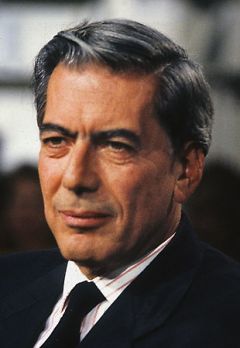 One of Latin America's most renown authors can now add the world's highest accolade in literature to his list of accomplishments.
This morning, Peru's Mario Vargas Llosa was announced as the winner of the 2010 Nobel Prize in Literature. According to the Nobel Prize's website the journalist, essayist, and playwright received such a prestigious accolade "for his cartography of structures of power and his trenchant images of the individual's resistance, revolt, and defeat".
Vargas Llosa's win may be seen as an upset to oddsmakers such as
Ladbrokes who placed him as a dark horse choice at 25-1. Bookies aside, however, Vargas Llosa is a worthy winner and a true "all around man of letters" as Bookslut columnist Jesse Tangen-Mills described him. Indeed, he has written over thirty novels, plays and essays and was awarded the Cervantes Prize in 1995.
The Arequipa-born wordsmith thus joins the likes of Octavio Paz and Pablo Neruda to become the sixth Latin American to win the award though the first South American since Gabriel Garcia Marquez way back in 1982. As the L Magazine wrote on Tuesday:
Consensus is that poets, South Americans and Scandinavians have been underrepresented in the selections of recent years (though not as much as black Africans); safe picks for geographical distribution would probably include the perpetual candidates Llosa and (Mexico's Carlos) Fuentes, Swedish poet Tomas Tranströmer and Syrian poet Adonis
Vargas Llosa's forays into politics included losing to Alberto Fujimori in a closely contested runoff in the 1990 presidential race. Last month he blasted current president Alan Garcia for suggesting a “barely disguised amnesty” for convicted rights abusers during Peru's armed conflict.
Image - MercoPress
Online Sources -nobelprize.org, Times of India, ABC News, The Millions, LAHT, L Magazine
Saturday, September 26, 2009
Weekend Headlines: September 26-27, 2009
 * Colombia: A survey conducted of international writers named Gabriel Garcia Marquez' “One Hundred Years of Solitude” as the most influential piece of world literature of the past quarter-century.
* Peru: On a related note, Peru’s Mario Vargas Llosa won the Caballero Bonald Prize for his book on Uruguayan author Juan Carlos Onetti.
* Honduras: The country’s political stalemate shows no signs of weakening as de facto President Roberto Micheletti claimed that "it's impossible to negotiate" with deposed President Manuel Zelaya while Zelaya accused Micheletti of poisoning him with toxic gas.
* El Salvador: Legislators defeated a bill that would’ve banned same-sex marriages and barred gay couples from adoption.
* Mexico: Police arrested five people accused of a series of murders in Ciudad Juarez including two incidents at drug rehab clinics.
* Argentina: At least twelve people were injured after police fought with workers protesting against layoffs at a Kraft Foods plant.
Online Sources- Guardian UK, Voice of America, IPS, Buenos Aires Herald, Wall Street Journal, MSNBC
Image- The Telegraph
Wednesday, February 11, 2009
Ex-presidents call for changing drug policy
 A group of intellectuals and Latin American ex-presidents have called for the revaluation of counternarcotics policy.
The group called the Latin American Commission on Drugs and Democracy emitted their report after meeting in Rio de Janeiro. Their report blasted the “war on drugs” and called for making drastic changes:
“The prohibitionist policies based on repressing production, intercepting trafficking and distribution, and criminalizing its consumption have not produced expected results…The goal of eradicating drugs has been farther than ever”…The commission also called for the legalization of marijuana for personal use as part of “changing (the) paradigms” of counternarcotics efforts.
“(Drug use) has transformed into a taboo that has prevented pubic debate…and confines drug consumers to a closed circle where they become more vulnerable to organized criminal activities.”
Members of the group include former presidents Fernando Enrique Cardoso (Brazil), Ernesto Zedillo (Mexico) and César Gaviria (Colombia) as well as Peruvian author Mario Vargas Llosa and Foreign Policy magazine chief Moises Naim.
Image- telecinco.com (Ex-presidents Fernando Enrique Cardoso and César Gaviria at the Latin American Commission on Drugs and Democracy conference)
Online Sources- Univision.com, El Tiempo, globo.com
Wednesday, December 10, 2008
Daily Headlines: December 10, 2008
 * Panama: U.S. Secretary of State Condoleezza Rice traveled to Panama yesterday in order to attend hemispheric trade talks.
* Venezuela: Hugo Chavez’ push for additional presidential terms is “something very dangerous” according to Peruvian novelist Mario Vargas Llosa.
* Latin America: According to a U.N. study poverty levels throughout the region could rise next year due to the global economic crisis.
* Brazil: Protestors yesterday tried to call attention to the reported 9000 people disappeared since January 2007.
Image- AFP
Sources- Reuters, IHT, CNN
Subscribe to:
Posts (Atom)