Showing posts with label Twitter. Show all posts
Showing posts with label Twitter. Show all posts
Wednesday, September 9, 2015
Daily Headlines: September 9, 2015 (Updated)
* Brazil: Financial analysts surveyed by Brazil’s central bank believe the country this year will face its worst economic performance since 1990 and predicted that the economy will keep shrinking in 2016.
Update: More bad news for the economy as Standard & Poor’s on Wednesday downgraded the Brazilian government’s sovereign debt rating to junk status.
* Ecuador: Canada’s Supreme Court ruled unanimously in favor of proceeding with an environmental damages lawsuit against Chevron though the tribunal did not “endorse the underlying Ecuadorian legal case.”
* Latin America: A new study found that digital use in Latin America grew between April 2014 and April 2015 including increases of 147% and 351% in activity for Facebook and Twitter, respectively.
* Cuba: Some 140 Cuban dissidents including twenty members of the Ladies in White were reportedly arrested yesterday while on their way to a Catholic mass.
YouTube Source – CNNMoney (“Brazil is struggling with high unemployment, rising inflation and a currency trading at 12-year lows.”)
Online Sources including Update – MercoPress, The Latin Americanist, Financial Post, Billboard, Latin American Herald Tribune, The Guardian

Thursday, June 18, 2015
Daily Headlines: June 18, 2015
* Puerto Rico: Gov. Alejandro Garcia Padilla admitted that he considered seeking Congressional approval to declare bankruptcy for Puerto Rico but instead decided that it “would have been less than impossible to obtain approval for such a measure.”
* South America: Colombia men’s national soccer team broke a 24-year-long winless streak against Brazil, while the female sides from both countries made it through to the Round of 16 at the Women’s World Cup.
* Cuba: Twitter execs are planning to expand service to Cuba despite the poor communications infrastructure on the island.
* Vatican: Pope Francis urged developed countries to take stronger actions against climate change, advocated phasing out fossil fuel usage and rejected population control as a tool to protect the environment.
YouTube Source – Monocle Magazine
Online Sources – Goal.com, Politico, BBC Sport, The Guardian, Fox News Latino
Tuesday, November 11, 2014
Mexico: Social Media Outrage Over Offensive Missing Student Tweets
Social media has been beneficial for businesses looking to promote their brand, increase sales and gain an advantage above their competitors. But it can also be a double-edged sword for companies that either inadvertently or purposefully post controversial messages in the aftermath of tragedies. This is a lesson that at least two Mexican companies faced after publishing a tweet alluding to the possible massacre forty-three students.
As seen above, the original message posted Sunday just after midnight on the twitter account for Mexico’s Nestlé Crunch roughly translates to “We Crunched the ones from Ayotzinapa.” The offending tweet was removed approximately two-and-a-half hours later and Nestlé apologized in four subsequent tweets.
“We regret for the recently published content and offer our deepest apologies. We are united with the families (of the disappeared)…and extend our apology to all of the brands affected by this bad joke,” read some of the content tweeted by Nestlé. Yet another message alleged that the Twitter account was hacked and that Nestlé was going to take all measures to prevent future infiltration. This excuse did not sit well with some netizens who voiced their anger at the candy company.
“Hahahaha ‘we were hacked’ hahaha,” “You finally got what you wanted … to make some noise” and “I will never again buy your product…and I hope you fire the idiot (behind the tweet)” were just some of the messages left behind by indignant social media users to the Mexican Nestlé Crunch twitter account.
Mario Vera, vice president for communications of Nestlé in Mexico, later told the press that the company would investigate if the “offensive message” came from someone within Nestlé or via a hacker.
Meanwhile, a Mexico City pizzeria belonging to the 50 friends chain of eateries also came under fire following an insulting tweet regarding the missing and reportedly murdered students.
Marca de chocolates Crunch publica tuit de burla sobre los normalistas
http://t.co/AKNIJDC79g
— Proceso (@revistaproceso) November 9, 2014
As seen above, the original message posted Sunday just after midnight on the twitter account for Mexico’s Nestlé Crunch roughly translates to “We Crunched the ones from Ayotzinapa.” The offending tweet was removed approximately two-and-a-half hours later and Nestlé apologized in four subsequent tweets.
“We regret for the recently published content and offer our deepest apologies. We are united with the families (of the disappeared)…and extend our apology to all of the brands affected by this bad joke,” read some of the content tweeted by Nestlé. Yet another message alleged that the Twitter account was hacked and that Nestlé was going to take all measures to prevent future infiltration. This excuse did not sit well with some netizens who voiced their anger at the candy company.
“Hahahaha ‘we were hacked’ hahaha,” “You finally got what you wanted … to make some noise” and “I will never again buy your product…and I hope you fire the idiot (behind the tweet)” were just some of the messages left behind by indignant social media users to the Mexican Nestlé Crunch twitter account.
Mario Vera, vice president for communications of Nestlé in Mexico, later told the press that the company would investigate if the “offensive message” came from someone within Nestlé or via a hacker.
Meanwhile, a Mexico City pizzeria belonging to the 50 friends chain of eateries also came under fire following an insulting tweet regarding the missing and reportedly murdered students.
Wednesday, July 9, 2014
Daily Headlines: July 9, 2014
* Mexico: Mexican legislators passed a major telecommunications reform package that could diminish the control of America Movil and Televisa over the phone and TV industries, respectively.
* Brazil: A record 35.6 million tweets on Twitter were sent during the humiliating elimination of Brazil from the World Cup by Germany on Tuesday.
* Argentina: Former Finance Minister Domingo Cavallo claimed that Argentina’s current debt repayment crisis could be worse than the country’s economic collapse that he presided over in 2001.
* Puerto Rico: Will the U.S. Congress provide a lifeline to the financially troubled Puerto Rican island?
Video Source – CCTV America via YouTube
Online Sources – Bloomberg; LatinFinance; USA TODAY; Reuters; The Latin Americanist
Wednesday, June 25, 2014
Colombian Gov’t Protest “Offensive” World Cup Comments
Colombia may be playing outstandingly well at the World Cup in Brazil, but that hasn’t stopped several public figures from making insulting comments being about the South American nation.
On the same day that Colombia finished its final group game with a third consecutive win, the Colombian government sent a letter of protest to Australians radio station Triple M regarding the “denigrating and offensive” remarks recently made on the air by two of the station’s DJs.
The Colombian Foreign Ministry (CFM) “requested that according to Australian radio’s Code of Practices…that the radio station apologize and punish” Matt Tilley and Joe Hildebrand for “discriminatory” comments made on their June 18th program.
On the date in question one of the presenters wondered “is Colombia really famous for its coffee?” to which his partner replied, “Are you suggesting there is another stimulant with (the letter) ‘c’ that Colombia is more famous for?”
Later one of them asserted, “It seems to me that if you mention Colombia the one thing they mention is ‘cocaine’” while the other man said several colloquialisms for the drug.
“You know, everybody (in Colombia) has it, sells it…I thought I wonder if that is true or if it offends Colombian people who go ‘You know what? We’re a bit more than that. We have gangs and we kill people too,’” claimed one of the pair.
They also alluded to the death of Colombian soccer player Andres Escobar who was killed following a World Cup own goal twenty years ago and referred to ex-goalkeeper Rene Higuita’s antics as something chimpanzees can do.
Wednesday, May 21, 2014
Colombia: Twitter Twit Nearly Lynched
In 2007, the term “¿Por qué no te callas?” (“Why don’t you shut up?”) entered the Spanish-language lexicon when King Juan Carlos of Spain ordered then-Venezuelan president Hugo Chavez to be quiet during a summit. The saying could be applied to a Colombian man who could be imprisoned for his Twitter comments on a recent tragedy that claimed the lives of thirty-two children returning from a church event.
In light of Saturday’s deadly bus fire in the town of Fundación, Jorge Alejandro Pérez made remarks via his Twitter account that at best can be described as a failed attempt at dark humor and at worse the heartless ramblings of a sociopath.
“With the high price of gasoline and for it to be wasted on 32 costeñitos? That’s stupid,” said the law school student. (Costeñitos refers to residents in Colombia’s coastal communities).
Pérez mentioned, “Lets gather funds and buy a gallon of gasoline to get rid of the costeños” along with the hashtag #MePrendoComoNiñoEnBus (roughly translated as #ICatchOnFireLikeAChildOnABus).
He also referred to the death of a homeless Bogota man nicknamed “Calidoso” who was attacked and set ablaze by unknown assailants earlier this month.
“The 32 kids went to feed Calidoso…and they ended up burning in hell,” Pérez said.
The reaction from social media included criticizing his remarks along with the hashtag #RepudioContraJorgeAlejandroPerez (#RepudiationAgainstJorgeAlejandroPerez). Pérez was quickly identified since his Twitter account didn’t mention his name but did include his photo. As a result, several hundred people Wednesday night gathered at the campus where he goes to school with the reported intent of lynching him. A police SWAT team prevented that from happening and he was escorted to a local precinct for the rest of the evening. A police spokesman claimed that he had left his home city of Ibague but did not specify exactly where.
“I recognize that I made a mistake and I offended all Colombians with my thoughtless comments,” said Pérez in a letter purportedly written by him. In an interview with local TV, he also asked “the Colombian people and the residents of Fundación to forgive him.”
It’s unknown if he’ll return to Ibague to his family’s residence that has been under police protection due to online threats to burn it down. What is certain, however, is that he won't be returning to the university where he studied since administrators on Wednesday announced that he will be expelled.
Tuesday, April 8, 2014
Nude Twitter Protest Against Venezuelan Gang Assault (Updated)
Venezuelan government officials met on Tuesday night with members of the opposition in order to negotiate a potential end to nearly two months of unrest. (Update: Both sides reportedly agreed to hold "formal talks" that could start as soon as this Thursday).
While plans are being made for the upcoming of the discussions, anti-government activists continue to voice their complaints against the regime led by President Nicolas Maduro. One of the most unique protests took part recently in response to allegations of human rights abuses.
Using the hashtag #MejorDesnudosQue (roughly translated #BetterToBeNudeThan), the campaign began on April 4th when a team of Venezuelan ad executives uploaded semi-nude photos of themselves. The previous day, images emerged of a young man at the University of Central Venezuela (UCV) who was forced to disrobe and sit naked on the grass while masked gang members assaulted him. (Video of this incident can be seen at the top of this post).
“When I saw the video (of the nude young man) it hit me very hard and that’s when I came up with this idea,” said ad agency executive Ricardo Cie.
“My friends and family where receptive and they generally commented that the photos where a distinct way to peacefully and intelligently protest,” said one of Cie’s workmates, Eliana Mora Golding.
“Generally nobody was offended though we did receive negative comments,” she added.
Between the start of the #MejorDesnudosQue campaign and Monday the hashtag became a trending topic on Twitter and mentioned over 201,000 times on that social media network.
Cie noted he and sixteen of his colleagues opted to do the campaign via Twitter since “there is an absence of Venezuelan TV channels that are showing the reality on the streets.”
Among those who have spoken out in favor of the #MejorDesnudosQue campaign and it’s related hashtag #DesnudosConLaUCV (#NudeWithTheUCV) is Cuban blogger and opposition activists Yoani Sanchez. She claimed that authoritarian regimes believe that “undressing their opponents constitutes one of the repressive practices they most enjoy” but the #MejorDesnudosQue idea may have changed this perspective:
Thursday, April 3, 2014
Daily Headlines: April 3, 2014
* Chile: No major damages or casualties have been reported as a result of several strong aftershocks following a magnitude-8.2 earthquake on Tuesday off the northern Chilean coast that caused six deaths.
* Argentina: Argentine President Cristina Kirchner introduced a new currency note featuring a map of the Falkland Islands and accused Britain of trying to turn the disputed archipelago into a “North Atlantic Treaty Organization military base.”
* Cuba: A new report alleged that the U.S. government helped create a now-defunct “Cuban Twitter” social network with the goal of causing unrest against the ruling Castro regime.
* U.S.: The U.S. and Mexico shared the spoils in a 2-2 tie in the latest chapter of the bitter soccer rivalry between the neighboring countries.
Video Source – euronews via YouTube
Online Sources- Bernama; TIME; The Huffington Post; ABC News
Wednesday, August 21, 2013
Hackers Attack Argentine President’s Twitter Page
Visitors to the Twitter page of Argentine President Cristina Fernandez de Kirchner where received with a surprise earlier this week after it was reportedly attacked by hackers.
The Argentine government was forced to shut down the president’s official Twitter page on Tuesday in response to the apparent infiltration.
On Monday the background of Kirchner’s account was changed to the logo of Argentine newspaper Clarin and included a photo of Jorge Lanata, a journalist who has accused Kirchner of widespread corruption. Several tweets were written poking fun at the government ("No me borren los tuits corruptossssssssssssss" and "ineptosssssssssssssssssssssss") as well as teasing Lanata and the TV channel that airs his weekly program (“El living de canal 13, defendiendo al gordo chanta que les vende un buzón son de terror”). These messages were removed within minutes of their publication and the account was subsequently suspended.
As of the time of this blog post, Kirchner’s Twitter page continues to be down and with a headline reading “Sorry, that page doesn’t exist!”
A statement from the Argentine government was made yesterday that denied making any alterations to the president’s Twitter page aside from suspending it. Officials did not identify who could’ve infiltrated the account but did allege that her website was the target of at least three distributed denial of service attacks (DDoS) over the weekend. (The Telecom Argentina phone company corroborated these claims).
Kirchner hasn’t been the only Latin American leader whose Twitter account has been compromised. Last April, Peruvian hackers purportedly infiltrated the Twitter page of Venezuelan president Nicolás Maduro. In February 2012, Interpol arrested twenty-six supposed members of the Anonymous collective and accused them of planning DDoS attacks against Chilean and Colombian government websites.
Wednesday, June 12, 2013
"Golden Voiced" Boy Mariachi Belts Out National Anthem
We'll be back on Thursday with (hopefully) several posts on recent news stories from around the Americas.
In the meantime, we ask that all those who can please rise for the singing of the U.S. National Anthem:
The above rendition of "The Star-Spangled Banner" was by ten-year-old Mexican-American singer Sebastien De La Cruz before the third game of the NBA Finals. The San Antonio native has been hailed as “The Boy With the Golden Voice” after his recent appearance on a nationally televised singing competition.
In the aftermath of De La Cruz' performance, several twits on Twitter aired their disapproval of him using racist and vulgar language. De La Cruz replied by noting, "My father was a U.S. Marine for a long time and they think I'm Mexican. I'm not from Mexico. I was born and raised in San Antonio and I'm a Spurs fan".
Video Source - YouTube via use Xsounders
Online Sources - El Diario/La Prensa; Salon.com
In the meantime, we ask that all those who can please rise for the singing of the U.S. National Anthem:
The above rendition of "The Star-Spangled Banner" was by ten-year-old Mexican-American singer Sebastien De La Cruz before the third game of the NBA Finals. The San Antonio native has been hailed as “The Boy With the Golden Voice” after his recent appearance on a nationally televised singing competition.
In the aftermath of De La Cruz' performance, several twits on Twitter aired their disapproval of him using racist and vulgar language. De La Cruz replied by noting, "My father was a U.S. Marine for a long time and they think I'm Mexican. I'm not from Mexico. I was born and raised in San Antonio and I'm a Spurs fan".
Video Source - YouTube via use Xsounders
Online Sources - El Diario/La Prensa; Salon.com
Tuesday, February 7, 2012
Daily Headlines: February 7, 2012
* Brazil: Authorities filed a lawsuit seeking to block Twitter accounts and messages warning about “radar locations, speed traps, and DUI checkpoints.”
* Mexico: Josefina Vasquez Mota became the first female presidential candidate from a major political party after winning the primary for the ruling PAN on Sunday.
* Dominican Republic: At least eighteen migrants died after the boat they where traveling in capsized off the Dominican coast.
* Cuba: Former president Fidel Castro made a “rare appearance” in Havana in order to promote his new memoir.
Image Source – Flickr via xioubin low (CC BY 2.0)
Online Sources- CNet News, Reuters, Voice of America, MSNBC
Thursday, February 2, 2012
Daily Headlines: February 2, 2012

* Mexico: According to the central bank remittances to Mexico grew by 6.9% in 2011; thus, representing the biggest rate of increase since 2006.
* Guatemala: Can the government and civil society unite to combat a “relentless wave of femicides”?
* Brazil: Social media research company Semiocast concluded that Brazil leapfrogged Japan to become the second most-represented country on Twitter.
* Venezuela: Trade between Cuba and Venezuela reportedly soared by 78% to over $6 billion in 2010.
Image Source – Flickr via navart (CC BY-SA 2.0)
Online Sources- Los Angeles Times, PC Magazine, IPS, El Universal
Monday, January 9, 2012
#TwitterFail

Politicians have increasingly turned to social networking sites in order to advice their agendas or to reach out to prospective voters during the election season. At times, however, sites like Twitter and Facebook have hurt politicos such as the cases of the following four Latin American figures:
- Andrés Chadwick
Giorgio Jackson, the head of the student protest movement, Tweeted in response to the Facebook message that “it seems like the majority in Chile are #MugrientosDeMierda due to our concern over education or not?” Meanwhile, the ex-senator was very upset in a TV interview this morning when he was asked about the allegedly false Facebook account.
- Gustavo Petro
“You will not live past this year guerilla” and “your actions reflect the passion…of a guerilla” were just two of the Tweets sent to Petro’s Twitter account. “Your words reflect the quality of your mind and heart,” replied Petro who used to be a member of the M-19 rebel army before laying down his arms and entering politics.
- Fidel Castro
Cuban state media blamed Twitter users for spreading the hoax of Castro’s death including “necrophilia counter-revolutionaries, aided by some media, (who) immediately started to party”. Yet the Spanish Twitter user who was accused of starting the death rumor rejected that claim and said that the Cuban press “should double-check their 'information' before blaming someone for no reason.”
- Carlos Talavera Leal
Talavera took to Twitter and gave his “deepest apologies” though that will not prevent Mexico’s National Council Against Discrimination from opening an investigation against him.
Image Source – Flickr via michperu
Online Sources – Milenio, Univision, CNN, Sydney Morning Herald, Miami Herald, RCN Radio, El Espectador, CBS News, Terra Chile, La Nacion
Wednesday, December 7, 2011
Daily Headlines: December 7, 2011
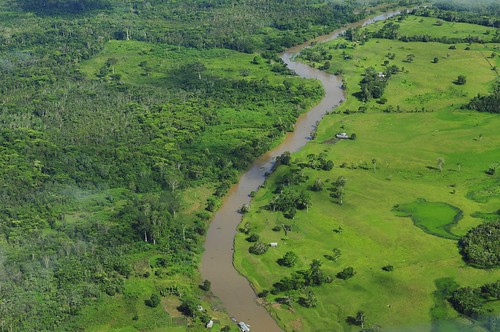
* Brazil: According to Brazil’s National Institute of Space Research deforestation in the Amazon rainforest dropped to its lowest level since record-keeping began in 1988.
* Honduras: Luz Marina Paz became the seventeenth Honduran journalist killed since 2010 after she was gunned down and murdered yesterday.
* Venezuela: Plans for a government-backed housing initiative have slowed down due to labor unrest at Venezuela’s largest steelmaker.
* Chile: Colo Colo, one of Chile’s most popular soccer teams, was the fifth-most popular sports topic on Twitter in 2011 according to the social networking service.
Image Source – Flickr via CIAT International Center for Tropical Agriculture (CC BY-SA 2.0)
Online Sources – MarketWatch, Fox News Latino, Twitter, CNN
Tuesday, December 6, 2011
World Watch: #2011

* World: #egypt, #japan, and #superbowl were some of the top Twitter hashtags of 2011 according to data from the social networking service.
* Afghanistan: At least fifty-nine people were killed by two bomb attacks aimed at Shi'ite Muslim followers.
* Russia: Moscow police arrested hundreds of protesters denouncing possible fraud by Prime Minister Vladimir Putin and his ruling United Russia party in recent parliamentary elections.
* Democratic Republic of the Congo: Officials announced that “technical difficulties” would delay the results of the country’s tense-filled presidential elections.
Image Source – Flickr via shawncampbell (CC BY 2.0)
Online Sources – CBS News, PC Magazine, Voice of America, BBC News
Thursday, September 22, 2011
Daily Headlines: September 22, 2011
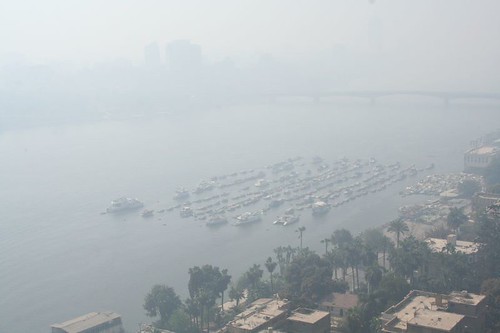
* U.S.: A study of several major metropolitan areas concluded that half of Latinos are at risk of serious illness as a result of high air pollution.
* Brazil: In what is sadly not a repeat of a case in 2007, a teenage girl claimed that she was abused and raped by male inmates at a Para state prison.
* Latin America: According to the International Monetary Fund economic growth this year in Latin America and Caribbean is expected to be less than initially estimated.
* Mexico: Prosecutors dropped terrorism and sabotage charges against two people jailed for sending Twitter messages about an alleged attack on a school.
Image – “Cairo Air Pollution with smog.” Ninahale via Flickr (CC BY 2.0)
Online Sources- Bloomberg, NBC Los Angeles, MSNBC, The Latin Americanist, Reuters
Friday, June 24, 2011
Daily Headlines: June 24, 2011
 * Peru: Machu Picchu will be removed from UNESCO’s list of endangered world heritage sites though conservation programs by the U.N. will continue.
* Venezuela: President Hugo Chavez Tweeted several messages after not appearing in public for nearly two weeks while recuperating from surgery in Cuba.
* Colombia: Are female Colombian guerillas fighting as “mercenaries” against rebels in Libya?
* Brazil: At least eight people were killed during a police raid at a Rio de Janeiro favela on Wednesday night.
Image – Getty Images via The Guardian
Online Sources- BBC News, Voice of Russia, Reuters, Magharebia.com
Friday, June 3, 2011
Daily Headlines: June 3, 2011
 * Cuba: Famed musician Pablo Milanes, who is best known for helping found the nueva trova genre, will play in Miami as part of a U.S. concert tour beginning in August.
* Chile: A judge ordered an investigation into the death of Nobel Prize-winning poet Pablo Neruda days after the body of former President Salvador Allende was exhumed.
* U.S.: According to a Pew Research Center report 19% of Latinos use Twitter, which is slightly less than blacks but more than double the percentage of whites.
* Argentina: Congress passed a new anti-tobacco law that bans smoking in public places and bars tobacco ads and sponsorship.
Image – RPP (Cuban musician Pablo Milanes in concert in Lima, Peru in 2009.)
Online Sources- CBS News, CNN, The Latin Americanist, The Hill, BBC News
Thursday, February 17, 2011
Brazil: Supreme Court apologizes for "inappropriate" Tweet
 Yesterday Nir Rosen resigned from his position as a fellow at New York University (NYU) after posting several insensitive Tweets regarding a sexual assault against journalist Lara Logan. “This incident is a testament to social media's far-reaching influence and the increasing need for its users to take caution before posting,” said an editorial in today’s edition of NYU’s student paper. It is surely a lesson that Rosen has learned the hard way though he wasn’t the only public figure this week to commit a Twitter faux pas.
A message was published under the Brazilian Supreme Court's Twitter account calling for Senate president Jose Sarney to resign. “Listen up: now that Ronaldo’s retired, when will Sarney decide it’s time to hang up his boots?” said the message that was posted on Tuesday. (The Tweet refers to soccer star Ronaldo who retired on Monday).
The Tweet was subsequently deleted and an apology to Sarney was published on the Supreme Court’s website. The note said that an as of yet unidentified court employee wrote “inappropriate messages for which this court offers its deepest apologies." Additionally, it’s unknown if the worker was fired for his/her Tweet.
The eighty-year-old Sarney is a veteran of Brazilian politics including serving as president between 1985 and 1990. A 2009 The Economist article cheekily titled “Where dinosaurs still roam” blasted Sarney and his “semi-feudal politics.”
On a related and more light-hearted note, the Brazilian press highlighted today the trouble of one particular Twitter user:
American Sarah Law Wu, who goes by the nickname Sarney on Twitter and saw her page overrun by Brazilians who mistook her for the Senator, was amused by the mistake…Image- TechCrunch
When the confusion began last week, she wrote: "People of Brazil, for the love of the dear baby Jesus, I am not Jose Sarney.”
Sarah earned the nickname of her aunt, who read stories about Gen. David Sarnoff.
Online Sources- Washington Square News, The Huffington Post, NPR, The Economist, Folha Online, Terra Brasil
Monday, August 23, 2010
The Latin American Tech Bust
 For all of the hubbub about exploding growth in Latin America this year, the region remains a challenging place for knowledge companies to do business.
The uncertain legal climate faced by internet companies is highlighted in cases that Yahoo! and Google are battling in Argentina. An Argentina entertainer, Virginia Da Cunha, sued Google because searches of her name turned up links to third-party pornography sites. Da Cunha had sued Google claiming that they were responsible for the third-party content that came up in Google's search results.
Naturally, Google feels they aren't - after all, Google simply indexes information on the web and displays it based on their search algorithms without any claim to police or monitor it preemptively. To do so would be a form of censorship. And because the internet is, well, the internet, it's also pretty impossible. Google and Yahoo! recently won an appeal overturning an original ruling that held them liable for controlling such content.
Yahoo!, also sued in the case, had a novel solution when faced with a similar lawsuit from Sports Illustrated swimsuit model Yesica Toscanini: since they say it's impossible to filter out what Toscanini doesn't want her name associated with, they simply blocked virtually all results to searches and deliver a link to the judicial order.
In a sign of the challenges facing tech firms in the region, the NY Times reports that "Google currently faces at least 600 lawsuits in Brazil."
As the Times rightly points out, this type of legal environment makes it very difficult for firms to innovate. The big guys have the cash to fight off every legal challenge - petty and legit - but small start-up firms (like Google, Yahoo! and Twitter were once) struggle to take risks and innovate in such an environment.
New firms are still sprouting up in the region, but as Sarah Lacey at TechCrunch chronicled here and here, the success stories tend to come from a very creative adaptation to the environment rather as a result of it (this despite the fact that in the 1990s Argentina ranked fifth in the world in registered web domains).
Another TechCrunch contributor, business professor Vivek Wadwa, recently pointed out that emerging markets can take advantage of a legal loophole to re-purpose technology that's patented in the US and other Western countries but not emerging ones. That and moving towards "fair use" laws that make every news aggregator (from Huffington Post to Drudge to THIS SITE) possible could do wonders to making Latin America as open as it should be to fostering web-based businesses.
Image Source: eldelosmonos.blogspot.com
Online Sources: New York Times, Sports Illustrated, TechCrunch
Subscribe to:
Posts (Atom)