 One day after a Chilean court re-stripped former President Augusto Pinochet of his immunity from prosecution, the Chilean Supreme Court upheld an earlier decision by the Santiago Appeals Court that acquitted him on charges of politcal abductions and murder. (New York Times)
Friday, September 16, 2005
Pinochet acquittal upheld
One day after a Chilean court re-stripped former President Augusto Pinochet of his immunity from prosecution, the Chilean Supreme Court upheld an earlier decision by the Santiago Appeals Court that acquitted him on charges of politcal abductions and murder. (New York Times)

18 candidates in Haitian presidential election
 Dumarsais Simeus, a Haitian-born businessman in Texas, became the 18th person to register to become a presidential candidate in Haiti's elections on November 20. The multi-millionaire says he hopes to use his business savvy to resurrect the Western Hemisphere's most impoverished economy. (The Mercury News)
Colombia's strengthened currency hurting exports
 The Colombian peso has risen 17% over the last 20 months, causing Colombian exports such as bananas, flowers, and fish to be less competitive abroad. An influx of foreign direct investment, dollars sent home from abroad, and a trade surplus are said to be responsible for the peso's steady rise. (Forbes)
Argentine gov. predicts surplus of 3% of GDP
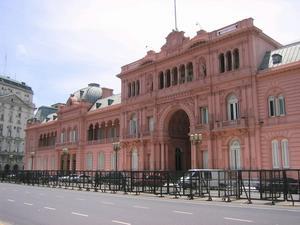 The Argentine government's budget, as delivered to Congress on Thursday, predicted a fiscal surplus of 17.8 billion pesos, equivalent to 3% of GDP. The report also brought down earlier estimates of a 5% annual GDP growth rate to 4% for the year. (Dow Jones Newswires)
Venezuela to purchase $1b in Argentine debt
 Venezuelan President Hugo Chavez announced in New York yesterday that his government planned to purchase $1 billion worth of Argentine government debt, in addition to the $557 million worth it purchased earlier this year. Though Chavez termed the move 'a good business deal' , some U.S. officials view the actions as an attempt to integrate the region economically and reduce dependence on U.S. capital. (Reuters)
Chile to impose $2 flight tax to combat poverty
 In a speech to the United Nations Wednesday Chilean President Ricardo Lagos said that his country planned to levy a $2 tax on international flights, the proceeds of which will be used to combat poverty in the country. (Bloomberg)
Thursday, September 15, 2005
Lula's PT to elect new leader
 Brazil's ruling Partido dos Trabalhadores is set to elect a new leader Sunday to replace Jose Genoino, who was forced to resign following allegations of corruption. The Sunday election is expected to be an informal decision by members of whether the party should return to its leftist roots or espouse the centrism embraced by President Lula da Silva. (Reuters)
Chinese companies snag Ecuadorean oilfields
 China Petrochemical Corp. and China National Petroleum Corp. have teamed up to purchase Ecuadorian oilfields from Canada's EnCana Corp. for $1.42 billion. The Chinese companies edged out India's Oil & Natural Gas Corp. by not insisting on a provision from EnCana that guaranteed the Ecuadorian government's recognizance of the transaction. (Bloomberg)
Peru issues passport to Fujimori
 Peru has re-issued the passport of former President Alberto Fujimori, who plans to return to the country from Japan to compete in the April 2006 elections despite a Congressional ban on his participation in politics until 2010. (Los Angeles Times)
U.S. officially declines Cuban aid offer for Katrina victims
 In separate press briefings this week White House officials maintained that aid from Cuba would not be needed due to a 'robust response from the American medical community', ending speculation that the Bush administration might accept much-needed aid from an old Cold War enemy. (MSNBC)
Guatemala may employ Brazilian ethanol program
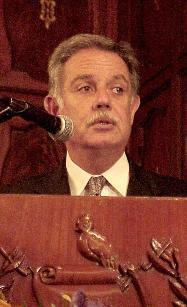 Guatemalan President Oscar Berger has indicated that his country may implement an ethanol-production system similar to that which Brazil uses to create a low-polluting additive for diesel and gasoline. The statement, made at the Brazil-SICA summit in Guatemala this week, displays how many countries are re-examining energy needs in light of skyrocketing prices. (Agencia Brasil)
Mexico 'no-visa' policy led to increase in Brazilian migration to U.S.
 Though Mexico's decision to allow Brazilians into the country without visas was intended to promote tourism and business, it led to a sharp increase in the number of Brazilians using the country as an entry point for illegal immigration into the United States. The policy, implemented 5 years ago, will now be revoked at the urging of U.S. officials. (Los Angeles Times)
Pinochet again stripped of immunity
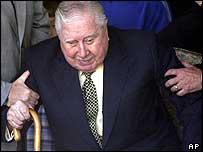 Former Chilean dictator General Augusto Pinochet has once again been stripped of immunity from prosecution, allowing another chance for him to stand trial for the deaths and torture that occurred under his regime from 1973-90. Though his opponents are encouraged by the additional chance to bring him to justice, many fear that he will again be judged not fit for trial due to illness and/or dementia. (BBC)
Commission: No accounts found in Fujimori's name
 A commission convened by the Peruvian government to investigate former President Alberto Fujimori's financial activities has not found any international bank accounts in his name. The report emphasized that this did not preclude the existence of such accounts, as he may have had dealings with institutions experienced in sheltering illicit earnings. (Reuters)
Oil discovery by Brazilian coast
 EnCanBrasil, a subsidiary of Canadian company EnCana Corp., has announced that it has made a 'promising' discovery of oil in the Campos Basin, approximately 75k from the coast of Brazil. (The Vancouver Sun)
Ecuador: EU tariff proposal not good enough
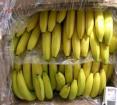 Ecuador has rejected the European Union's offer to lower banana tariffs to 187 euros per ton, saying that the tariff is still far too high and that international arbitration may be needed to settle the dispute. EU officials fear that trade may be diverted from the protected banana regimes of former European colonies to Ecuador, now the world's biggest banana exporter. (Reuters)
Subscribe to:
Posts (Atom)