 The possible resignation of Brazilian Finance Minister Antonio Palocci due to an ongoing corruption enquiry of the Partido Trabalhador sent the Bovespa, Brazil's stockmarket, and the real tumbling. The real sank 2.17% against the dollar, and the stockmarket slid .96%. (Reuters)
Tuesday, November 15, 2005
Palocci's possible resignation sends Brazilian markets tumbling
The possible resignation of Brazilian Finance Minister Antonio Palocci due to an ongoing corruption enquiry of the Partido Trabalhador sent the Bovespa, Brazil's stockmarket, and the real tumbling. The real sank 2.17% against the dollar, and the stockmarket slid .96%. (Reuters)

Peru errs in sea border dispute: rebuttal

From Giancarlo:
Hey! Great to see so many people talking about our tiny countries... I'm a Peruvian expatriate living overseas, and I'm accustomed to questions such as “Peru? Is that in Africa?”… It is really encouraging to find articulated people discussing about South American politics!
Regarding timing let me tell you that, in this particular case, it doesn’t have anything to do with our poor economic results, with the low acceptance of Toledo’s policies (his popularity is well below 10%) or with the fact that Fujimori decided to arrive in Chile, leaving his comfortable auto-exile in Japan. During the whole Toledo presidency, we have all had the feeling that economic results are favoring only wealthy people; Toledo’s popularity has been extremely low since his first semester in charge; And Fujimori arrived in Chile after the Peruvian sea border reclamations were stated.
Besides, Peruvian reclamations were following a diplomatic track when Chilean politicians decided to make lots of noise about it. I’m not saying that this reclamation is non-important but that the noise started there (and it was promptly replicated in Peru, I must admit). Please remember that Chile is closer to national elections than Peru. Sorry if “noise” sounds offensive, I don’t mean that but, please, take note that in Spanish “ruido politico” is a common term (and that my English is not that good).
Regarding the validity of our position, I must admit that while it sounds fair (please, check this graphic in Wikipedia, sorry it is in Spanish) I think that Chile has more chances to win the dispute than us. Not because our position is wrong, but because the status quo of the last decades favors them. Peru considers that there is no formal sea borders treaty with Chile (and by that, we mean a treaty proposed by the Foreign Affairs Ministry and ratified by the Congress), while Chile considers that the status quo (and the treaties signed by the Fishing Ministry and other Ministries) are valid sea borders treaties. It’s like the housing law in Peru: if you can prove that you have been living in the same house for more than 20 years without anybody complaining, the house is yours. And Chile has been effectively administrating the marine region in dispute for at least 30 years.

There’s a nice article in Wikipedia explaining both points of view (I’m sorry again for it’s in Spanish). Maybe the Google auto-translation feature can help you understand it.
And Taylor, thanks again for setting up this nice space. I may not agree with your opinions, but it’s nice to find people that care about our beloved continent.
I’ll keep reading you!
Peru errs in sea border dispute
 -Taylor Kirk
 Peru’s Congress unanimously passed a law November 3rd to redraw their sea border with Chile, claiming more than 14,000 sq m of territory now held by Chile. The timing of the claim is unfortunate, as issues like the extradition of former Peruvian President Alberto Fujimori from Chile and the prosecution of a wealthy Chilean businessman in Peru have strained ties between the nations. The sudden claim might also cause some to wonder whether the timing was in fact fortunate for Peruvian politicians. With a sagging economy and low consumer confidence, the Peruvian Congress may be looking for an easy scapegoat with which to redirect the populace’s attentions.
Peru’s claim to additional maritime territory seems baseless. In 2002 foreign ministers from Ecuador, Chile, and Peru met to celebrate the 50th anniversary of the “Santiago Declaration”, which outlines the claims that Peru now disputes. In the declaration, all parties “express their satisfaction and pride” with the agreement, that stipulated “the principle of the 200 nautical miles, practised worldwide by states, as an essential part of the law of the sea”. Though no mention is made of the horizontal line between the two countries’ maritime borders, the satisfaction expressed by all parties of the success of the agreement over the previous 50 years indicates that all parties accepted the line that runs due west from the coast of the Peru/Chile border that divides the maritime territory. This is the line that Peru now disputes.
The re-affirmation of the agreement just three years ago leads one to consider political factors for the resurgence of the claim. With elections coming up in April, congressional delegates may be jockeying for easy populist support by verbally attacking a nation Peruvians have long held distrust for. Fujimori’s unexpected return to the continent shook up Peru’s political scene, and President Alejandro Toledo, who signed the law claiming the new borders, is hugely unpopular. He may be seeking even the smallest legacy for his term, as he has little to no chance of winning re-election. This is all unfortunate, because Peru’s Congress has a mountain of other priorities it should tackle before revising claims it celebrated just three years ago. (UNCLOS, COVEMAR)
Venezuela gets upgrade from Fitch Ratings
Fitch Ratings announced yesterday that it upgraded Venezuela's long-term foreign currrency and long-term local currency ratings to B+ from BB-. Fitch suggested that the ratings could improve even further if Venezuela reduced its vulnerability to oil price fluctuations.
Nicaraguan minister reignites border dispute settled two centuries ago
 Nigaraguan Foreign Minister Norman Caldera angered Costa Ricans Tuesday when he claimed that his country had the right to take back Guanacaste, a province annexed by Costa Rica in 1825. (Daily Journal)
Monday, November 14, 2005
Blogs used by Chilean presidential candidates
 -Contributed by Erwin Cifuentes. Four Chilean presidential candidates have used blogs to reply to citizens’ questions and concerns on issues such as AIDS prevention and the border dispute with Peru. (OhMyNews)
Acceptance speech: Mary Anastasia O'Grady, winner of IPN's 2005 Bastiat Prize for Journalism
 I want to thank the International Policy Network, both for awarding this prestigious prize to me and for all of its work on behalf of liberty, including the establishment of this very important recognition. Thank you very much. I also want to thank the Wall Street Journal and especially the editorial page and Paul Gigot for giving me a place to write about the Latin American region from a classical liberal perspective. Finally, I want to thank my editor George Melloan, who is the best boss and the best editor I could ever have hoped for. I share this honor with him.
 Since we're here tonight to recognize journalists who defend freedom, I'd like to take a moment to say a word about Cuba's independent journalists and writers, many of whom are in jail right now for the crime of refusing to conform. They are a constant source of inspiration for me. In 1999, before I was named a "counter-revolutionary" and forbidden to travel to Cuba, I took a trip to the island. A Cuban writer I know living in Spain had asked me to try to see a political dissident there, with whom he had established a correspondence. All he gave me was a phone number. From a pay phone in the street in Havana, I called the number and was instructed where and when to meet my contact. In front of my hotel was a line of shiny cars and a group of uniformed drivers, who worked for the government. But none of them had any idea how to get to where I wanted to go. They got in a heated argument over the question and I finally walked away from them. It was the entrepreneurial taxi drivers with the old 1950s cars who knew the city and I happened upon one who agreed to take me to the address. I was a bit worried for him, because, as he explained to me, he was not permitted to carry foreigners. And it was quite clear that I was not a local. I am way too fat to pass for a starving Cuban.
Happily, we managed to make it to the destination without being stopped. We pulled up in front of what I can best describe as a prime example of that major soviet contribution to architecture: a concrete block. With its broken windows, it literally looked like a bombed out building in Sarajevo. I stupidly got in the tiny elevator in the lobby, which promptly began to climb, then stalled and went black. The diminutive elderly Cuban lady with me said nothing. We stood in the heat and darkness for almost ten minutes. I stayed calm by noting that she wasn't panicking and figuring that this must have been routine. Then just as suddenly as it had stopped, the car lurched,the lights came back on and the ascent continued. I tell you this to give you a feel for Cuba and to describe the general sense of poverty, entrepreneurial oppression, and hopelessness that characterized Havana in 1999. It was all very grim.
Yet once I entered the apartment of the dissident I was to interview, everything changed. He and his wife met me with smiles and enthusiasm and proceeded to tell me why they were convinced their country was changing. Sewer roaches were walking on the walls but they didn't seem to notice. I had brought them a plastic bag filled with bars of soap, a rare commodity in Cuba and non-existent for anyone at odds with the regime. They were ecstatic. Neither one of them had jobs, of course. He seemed terribly thin. But they were brimming with optimism. Their calculation was simple: the economic interests of so many small businesses-like my taxi driver-- together with the church and opposition groups that were circulating information bulletins, were slowly weakening the system. Change will come, he told me, not because the government wants it but because the younger members of the ruling class "know they cannot survive like this."
Four years later in March 2003 that man, along with some 75 others, was arrested in a sudden assault on the dissident community. He is now serving asentence of more than 15 years. His arrest was part of a brutal crackdown explicitly designed to halt the process he had described to me during my visit. The regime decided it was not going to happen. It's estimated that there are some 350 political prisoners in Cuba today. All of them willingly pushed their luck at one time or another, fully aware of the downside risks to which they were exposed. And they are paying dearly for their crimes of dissent. The Castro regime has not changed its methods of dealing with its critics in the nearly five decades it has been in power. The goal is to force the capitulation, "reeducation" and "rehabilitation" of the non-conformist. Beatings, torture, sleep deprivation, weeks of confinement in punishment cells that have little ventilation and are too small to lie down in, infestations, malnutrition, psychological manipulations and the use of common criminals to terrorize are all designed to break the spirit. Political prisoners are deliberately placed on opposite ends of the island from their families and a large number of them have medical conditions that go untreated. What amazes me about these heroes is their capacity to resist.
ArmandoValladares-who spent 22 years as a guest in one of Fidel's dungeons-revealed some of what inspires the will to resist, despite the suffering, in his memoir Against All Hope when he wrote that as long as he refused to give in, he saw himself as a free man. "They've taken everything away from me -- or almost everything. I still have my smile, the proud sense that I'm a free man, and an eternally flowering garden in my soul." Amazingly, after being nearly annihilated in March 2003, Cuba's dissident movement is up and running again, spreading the gospel and recruiting newminds, according to reports from the island. The government is using the fullest extent of its power to try to extinguish that recovery by brutalizing the jailed. For their part, the prisoners have shown that they will not yield. They are an astonishing combination of hope and courage. Let's not forget them. Thank you.
Merrill Lynch: Brazil one of several leading emerging international markets
 -Contributed by Erwin Cifuentes. A Merrill Lynch report on Global Emerging Markets found Brazil, South Korea, and Russia as its “best buys.” The report also found Brazil and Mexico as having “the strongest markets in dollar terms”. (Economic Times)
Colombia will continue evicting indigenous squatters
 -Contributed by Erwin Cifuentes. Members of the Guambiano tribe resist efforts by police to remove them from lands the Guambianos claim were promised to them via a land reform program. As a result, confrontations between the Guambianos and Colombian police have intensified over the past few days. (Slide show, BBC)
A new iron lady for Chile

-Taylor Kirk
This weekend, Chileans are expected to elect their first female president, who happens to be a former Minister of Defense and a single mother. Michelle Bachelet is well ahead in most polls, though carrying less than 50% of the likely vote, making it likely that her victory will ensue from a runoff election. Though well-liked and popular in her homeland, few outside Chile are familiar with her history or her proposals for Latin America's most dynamic economy.
Bachelet's success stems from her ability to project her status as a common Chilean, her anti-Pinochet credentials, and her Socialist party affiliation, whose brand and reputation is in good condition after years of a booming economy under Ricardo Lagos. Her gender seems not to have stunted her popularity, though she puts to rest any accusations of being soft on defense with her success in reforming the military, an institution historically dominated by the male elite. As Minister of Defense she pushed through reforms to upgrade defense capabilities and include women in the military, making the percentage of female conscripts higher even than in the United States. A pediatrician by training, she also headed the Health Ministry until 2002, where she worked to reduce waiting times at public hospitals.
Her proposed economic policies are similar to those of her party colleague, Ricardo Lagos. As socialists, they are both committed to reducing the wide wealth gap and broadening access to education and telecommunications. Bachelet has proposed improvements to the country's pensions system, famously privatized by former secretary of labor and social security, Jose Pinera. Bachelet has said that she will maintain the current sales tax, crack down on tax evasion, and spend carefully the revenues produced by copper exports, which provide almost 15% of government revenues.
If she is in fact elected, she will be the first Chilean leader to rule under the newly reformed Constitution, signed by Lagos this September to reduce the entrenched control of the military over the country's politics. Thus she will have the power to fire the armed services commanders and summon the military-affiliated National Security Council, instead of the previous system that granted the NSC automatic advisory powers over the President. The reforms also changed the President's term from 6 years to 4, to coincide with Congressional elections, giving Bachelet less time to prove her worth as just the second female ever to be elected president in a South American nation.
Simeus amongst pair barred from Haitian presidential ballot
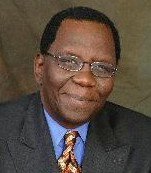 -Contributed by Erwin Cifuentes. Haiti’s electoral body banned two U.S.-born citizens from being placed on the presidential ballot including Texas businessman Dumarsais Simeus. The electoral board rejected Simeus and Samir Mourra since they hold foreign passports based on their American citizenship. (Reuters)
Editorial: U.S.-Latin America rift deeper than ever
 -Contributed by Erwin Cifuentes. There is a profound difference in goals and priorities between the U.S. and Latin America, according to an editorial published Sunday in the Los Angeles Times. The article goes on to note that it is critical that the Bush administration improves relations with the region and resist the temptation to marginalize Latin America. (LATimes)
World Cup qualifiers: Uruguay wins while Trinidad ties
 -Contributed by Erwin Cifuentes. Uruguay and Trinidad and Tobago played the first of two matches Saturday afternoon in order to qualify for next year’s soccer World Cup. Dario Rodriguez’s header in the 37th minute gave Uruguay a narrow 1-0 victory over Australia in Montevideo. (SoccerNet) Jorge Fossati, coach of the “charruas,” anticipates his squad will qualify for the World Cup even though a loss in the rematch Wednesday morning in Sydney would eliminate Uruguay. Meanwhile, the “Soca Warriors” played to a 1-1 tie with Bahrain in Port-of-Spain as midfielder Chris Birchall scored Trinidad’s lone goal four minutes after Bahrain converted the first goal of the game. Trinidad is forced to win the rematch this Wednesday in Bahrain in order to qualify for the first time to the World Cup.
UN: Guatemala is “a ticking time bomb”
 -Contributed by Erwin Cifuentes. Guatemala could face a severe hunger crisis as early as Christmas according to a senior official with the United Nations World Food Programme Duilio Perez warned that donations are urgently needed to feed nearly an estimated thirty thousand Guatemalans affected by the impact of Hurricane Stan. (UN)
Peruvian ambassador to leave Japan
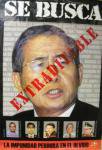 -Contributed by Erwin Cifuentes. The Peruvian government announced on Thursday that it would recall their ambassador from Japan. A Peruvian embassy official claimed that recalling the ambassador would be “an expression of protest” against Japan’s role in ex-President Alberto Fujimori’s arrest in Chile on Monday. (Japan Today)
Colombian economic growth higher than expected
-Contributed by Erwin Cifuentes. Colombia’s Central Bank estimates that the country’s GDP will grow by around 4.5% this year, which is higher than the government’s initial estimate of 4%. (Reuters)
Subscribe to:
Posts (Atom)