Thursday, October 07, 2010

Today’s Video: The duality of Colbert

There are occasions when Stephen Colbert emphasizes his quasi-conservative shtick like his appearance at the 2006 White House Correspondents Dinner or when he gave testimony at a Congressional hearing two weeks ago. Yet there are also times when his commentary can be thought-provoking and profound such as his explanation of why he defended migrant rights during the aforementioned hearing.

These two sides of Colbert's persona were manifested on Tuesday's episode of "The Colbert Report". The first part of the feature discusses violence against Mexican journalists though not without some jokes and quips. Starting at the 3:00 minute mark, however, Colbert takes on a more serious tone while interviewing NPR correspondent John Burnett. While some of his remarks are still humorous Colbert helps to bring out Burnett's expertise on threats against the media and how the drug trade could be changed. It's a very revealing and informed exchange that is well worth watching:
The Colbert ReportMon - Thurs 11:30pm / 10:30c
Gang Busters - John Burnett
www.colbertnation.com
Colbert Report Full Episodes2010 ElectionMarch to Keep Fear Alive

Online Sources - ABC News, YouTube, Colbert Nation

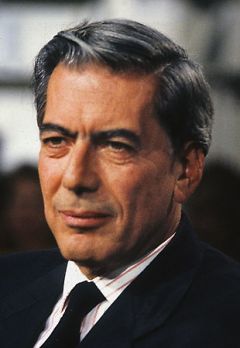
Mario Vargas Llosa wins Nobel award

One of Latin America's most renown authors can now add the world's highest accolade in literature to his list of accomplishments.

This morning, Peru's Mario Vargas Llosa was announced as the winner of the 2010 Nobel Prize in Literature. According to the Nobel Prize's website the journalist, essayist, and playwright received such a prestigious accolade "for his cartography of structures of power and his trenchant images of the individual's resistance, revolt, and defeat".

Vargas Llosa's win may be seen as an upset to oddsmakers such as
Ladbrokes who placed him as a dark horse choice at 25-1. Bookies aside, however, Vargas Llosa is a worthy winner and a true "all around man of letters" as Bookslut columnist Jesse Tangen-Mills described him. Indeed, he has written over thirty novels, plays and essays and was awarded the Cervantes Prize in 1995.

The Arequipa-born wordsmith thus joins the likes of Octavio Paz and Pablo Neruda to become the sixth Latin American to win the award though the first South American since Gabriel Garcia Marquez way back in 1982. As the L Magazine wrote on Tuesday:
Consensus is that poets, South Americans and Scandinavians have been underrepresented in the selections of recent years (though not as much as black Africans); safe picks for geographical distribution would probably include the perpetual candidates Llosa and (Mexico's Carlos) Fuentes, Swedish poet Tomas Tranströmer and Syrian poet Adonis

Vargas Llosa's forays into politics included losing to Alberto Fujimori in a closely contested runoff in the 1990 presidential race. Last month he blasted current president Alan Garcia for suggesting a “barely disguised amnesty” for convicted rights abusers during Peru's armed conflict.

Image - MercoPress
Online Sources -nobelprize.org, Times of India, ABC News, The Millions, LAHT, L Magazine

Daily Headlines: October 7, 2010

* U.S.: Forbes’ list of the world’s most powerful women includes Supreme Court justice Sonia Sotomayor (19th), Brazilian model Gisele Bundchen (72nd), and the presidents of Argentina and Costa Rica (68th and 83rd respectively).

* Puerto Rico: FBI agents arrested nearly 130 people including about 90 cops as part of an investigation into alleged corruption within the Puerto Rican police.

* Latin America: The International Monetary Fund claimed that Latin America and the Caribbean are recuperating from the global economic slowdown faster than originally prognosticated.

* Cuba: President Raul Castro claimed that the U.S. has ignored at least three offers since 2001 for "bilateral cooperation to fight against terrorism."

Image – CBS News
Online Sources- Bloomberg, AP, Forbes, Miami Herald

Wednesday, October 06, 2010

World Watch: Building blocks

* World: The 2010 Nobel Prize in Chemistry was given to three scientists in recognition of their groundbreaking work on carbon atom binding.

* Afghanistan: Afghani offices denied reports suggesting that the government has engaged in “high-level talks” with the Taliban.

* Indonesia: At least 64 people died and an estimated 3000 were displaced as a result of flash flooding and hard rainfall.

* Congo: Authorities arrested a rebel commander whose troops raped over 300 Congolese villagers approximately two months ago.

Image – Christian Science Monitor (“The winners of the 2010 Nobel Prize for chemistry are announced Wednesday in Stockholm, Sweden: Richard Heck, Ei-ichi Negishi, and Akira Suzuki.”)
Online Sources- MSNBC, CNN, The Guardian, Al Jazeera English

Daily Headlines: October 6, 2010


* Bolivia: President Evo Morales lost his cool at a friendly soccer match and gave new meaning to the idea of politicians “hitting below the belt”.

* Haiti: International charity group Oxfam alleged that post-earthquake foreign food aid has devastated the Haitian agriculture sector.

* Canada: Have “anti-terrorism laws” unfairly stacked the odds against a Salvadoran man living in Canada since 1996 and seeking refugee status?

* Cuba: According to reports State Department officials are working to repatriate most former Cuban political prisoners from Spain to the U.S.

Video Source – YouTube
Online Sources- CBC, Reuters, The Latin Americanist, MSNBC, Voice of America

Tuesday, October 05, 2010

Today’s Video: Brazil's "Ciudado Kane"

Is the media as a whole or in part biased? Have certain press outlets have so much power that they can sway elections and popular opinion? Has journalism been subverted by the influence specific media conglomerates have? Can the press be trusted at all?

These questions (and many others) were raised in a 1993 British documentary entitled "Beyond Citizen Kane." The film focuses on Brazil's Rede Globo and how founder Roberto Marinho constructed a regional media empire. The documentary, which so far yet to air on TV in Brazil, examined how the late Marinho amassed power by allying with the country's military dictatorship and implied that biased reporting on TV Globo was decisive in the 1989 presidential election.

Bootleg copies of the film can be found online in Portuguese with some English subtitles. Here is a portion of a very revealing documentary:

Daily Headlines: October 5, 2010

* Chile: President Sebastian Pinera expressed his hope that 33 miners trapped underground since early August could be freed before the end of next week.

* U.S.: Eleven Latin American countries including Costa Rica, Mexico and Peru filed a legal brief in Arizona Gov. Jan Brewer's appeal of a July ruling on a controversial immigration measure.

* Colombia: The country’s inspector general barred two former intelligence chiefs from nearly two decades of public office due to their roles in an illegal wiretap scandal.

* Haiti: Some Canadian politicos alleged that the government staged a “photo op” by rerouting a post-earthquake flight with 24 Haitian orphans.

Image – BBC News (“Alberto Segovia, outside the San Jose mine in Copiapo, Chile, shows a portrait of his brother Dario Segovia, 48, one of 33 miners trapped inside.”)
Online Sources- CBC, AP, The Latin Americanist, MSNBC, Voice of America

Monday, October 04, 2010

Ecuador Police Accept Cuts


After riots that left President Rafael Correa gasping for breath, police in Ecuador faced their bonus cuts today without protest, Reuters reports.

The country's recent rebellions were partly blamed on a new law ending promotion bonuses for police officers and soldiers. It also means no more gifts at Christmastime.

The law was passed yesterday and officially expected to start today.

In the country over the weekend, soldiers patrolled the streets in armored vehicles, the wire reported.

"Everything seems to be returning to normal," police spokesman Richard Ramirez told Reuters.

Are you in the country? Tell your experiences in the comments below.

Sour

Photo: Getty

Latin American Investments Increase


Latin America is drawing a lot of new business these days.

Privalia, an online sales club, plans to funnel as much as $95 million into new markets in Latin America, Venture Beat reported.

Privalia already operates in Italy, Mexico, Brazil and Spain but may expand to Argentina to Colombia with their increased funds.

Hilton Worldwide already has its eye on the region, too, reports Hotel News Now.

They're developing seven more hotels, carrying 1,250 rooms, in Argentina, Brazil, Colombia, Chile and Peru. The company hopes to create 150 hotels in five years.

Ted Middleton, Hilton Worldwide's senior vice president of hotel development and finance for the region, said the expanding South American middle class and continued travel between the countries piqued the company's interest.

“There are millions of Brazilians moving from one class to another,” Middleton said. “When you think about 20 million people, that’s a huge market.”


In the midst of this economic boom for the region, Mexico is winning in the investment realm, Bloomberg reported today.

Mexico's beating the U.S. and Brazil for the first time since 2002 in stocks, bonds and currency, Bloomberg reported.

Experts cite the U.S.-Mexico NAFTA partnership as one reason. Read more here.

Sources: Bloomberg, Hotel News Now, Venture Beat

Photo: Caribe Hilton Resort Hotel, http://www.canellasrealestate.com

Daily Headlines: October 4, 2010

* Peru: Vladimiro Montesinos, former spy chief and aide to disgraced ex-president Alberto Fujimori, was sentenced to at least 25 years in prison over his role in a pair of massacres.

* Ecuador: The government may reconsider a controversial law that led to violent protests against President Rafael Correa last Thursday.

* Cuba: Spain’s Repsol will reportedly drill several oil wells off the northern Cuban coast next year.

* Puerto Rico: Police on the island have come under fire as a result of several recent incidents where cops may have used excessive force.

Image – teleSur
Online Sources- AP, LAHT, Miami Herald, The Guardian, The Latin Americanist

Sunday, October 03, 2010

Runoff needed to decide Brazil presidency

The good news for Dilma Rousseff was that she easily beat Jose Serra in today’s elections for the Brazilian presidency. The bad news for her was that she couldn’t avoid a runoff.

With about 95% of the ballots counted for Worker’s Party candidate Rousseff received just over 46% of the vote, just short of the majority she would’ve required to win the presidency. The woman selected by President Luiz Inacio Lula da Silva to succeed him will have to run against the conservative Serra in the next stage.

According to Reuters Rousseff is “favored to beat Serra in the runoff” that will take place on October 31st. Yet the deciding factor could be former environmental minister Mariana Silva who received 20% of the vote. The Green party candidate could be a “king or queen maker” said Jonathan Wheatley of the Financial Times’ beyondbrics blog who also wrote:
Of the three leading candidates, (Silva) was the only one to use TV debates to promote reform of Brazil’s bloated pensions system, for example. Already this evening, leaders of Serra’s PSDB have been calling on her to secure her support.

It could be a bruising second round, with more surprises on store.
Aside from the presidency Brazilian voters also went to the ballots to choose thousands of local and legislative representatives. Clown-turned-comedian Francisco Everardo Oliveira Silva “Tiririca” received over 1.1 million votes and easily won his bid for the Chamber of Deputies. (Whether he will be legally allowed to take his seat is another issue, however).

Image- The Guardian (Dilma Rousseff fell short of preventing a runoff in Brazil’s presidential race).
Online Sources- Folha Online, Reuters, FT.com, globo.com, The Latin Americanist

Saturday, October 02, 2010

Today’s Video: The horror of Carandiru

October 2nd is an infamous date in Mexican history since it was on that day in 1968 that the Tlateloco massacre took place. Several hundred demonstrators were believed to have been killed by government troops in Mexico City only days before the Summer Olympics were to begin. The massacre would lead into a "dirty war" that was smaller in scope compared to later efforts in Argentina and Chile but would still be repressive against government opposition.

Nearly a quarter of a century after the Tlateloco massacre another mass killing would shock Brazilians.

1992 was a dark year for Brazil with the shameful resignation of President Fernando Collor de Mello and the senseless murder of actress Daniela Perez. Yet the lowest point was eighteen years ago today when 111 inmates were slain in the Carandiru Penitentiary. Military police were accused of killing most of the prisoners while trying to control a riot in the overpopulated facility. Ex-police chief Ubiratan Guimaraes was convicted in a 2001 trial where eyewitnesses and forensic experts claimed that troops killed inmates execution-style and even those who had surrendered. Guimaraes' conviction would be overturned in 2006 and no other officials since then have been punished for the Carandiru massacre.

Carandiru was demolished in 2002 and a public park currently sits on the site of what had once been South America's largest prison complex. The memories of the “biggest act of cowardice committed by the Brazilian State against the imprisioned population in the country's history” still lingers, as one blogger said in 2008.

The following video from VBS (via CNN) shows how former Carandiru guard Ronaldo Mazotto de Lima has saved thousands of pieces of evidence documenting the 1992 massacre. Some of the images in the clip are violent and Not Safe For Work though Mazotto believes that they are needed in order to preserve the infamy of Carandiru:

Friday, October 01, 2010

Daily Headlines: October 1, 2010

* Peru: Paleontologists discovered the 36-million-year-old fossil of a “giant penguin” that had gray and reddish brown feathers and was over five feet tall.

* Latin America: Over 600 people in thirteen South American countries were arrested for counterfeiting products according to Interpol.

* Venezuela: At least sixteen people were killed after a four-day riot took place in a northern Venezuelan prison.

* Mexico: Farmers in the world’s fourth-largest producer of corn are expected to grow a record 24.9 million tons of the vegetable this year.

Image – BBC News
Online Sources- CNN, LAHT, MSNBC, Bloomberg